|

| |
FLORICANTO PRESS TITLE LIST

-
Aurora. By Rafael Castillo. ISBN:978-1888205-30-5
-
Between Borders: Essays on Chicana/Mexicana
History, by Adelaida del Castillo
-
Bring me more Stories:
Tales of the Sephardim, by Sally Benforado
-
Bilindex
General: A bilingual Spanish-English Subject Heading List
, by Roberto Cabello-Argandoña
NEW
-
Bilindex
High-Tech: A bilingual Spanish-English Subject Heading List
in the fields of computer, information, and communication sciences, by Roberto Cabello-Argandoña
-
Bilindex
Medicus
NEW
-
Borrowing Time: A Latino Sexual Odyssey, by Carlos T. Mock, M.D.
-
Bring Me a Story, by Sally
Benforado.
-
Brotherhood of the Light: A Novel of the Penitentes and Crypto-Jews of New
Mexico, by Ray Michael Baca.
-
Broken Web: The Educational Experience of
Hispanic American Women, by Teresa McKenna
-
Chalino: A Chronicle Play of Fulgor and Death.
By
Julián Camacho Segura.
-
Chicano Public Catalog, by
Roberto Trujillo
-
Cinco de Mayo: A symbol of Mexican Resistance,
by Roberto Cabello-Argandoña. New Edition
-
Cinco de Mayo: An Epic Novel, by
David Monreal.
-
Cinco de Mayo: An
Illustrasted History,
by Roberto Cabello-Argandoña. New Edition
-
Clay Hills and Mud Pies.
By Annie Mary Perez.
NEW
-
Competing Truths in Contemporary Latin American Literature: Narrating
Otherness, Marginality, and the Politics of Representation. By Sandro R. Barros.
-
Cuba Libre. Mentirita! By Carlos T. Mock,
M.D.
NEW
-
The Cubans: Our Legacy in the United States. A
collective biography. By Fernando "Fernán" Hernández.NEW
-
Cult of the Jaguar, A Mayan Tale. By
Bonnie Hayman.
-
Dark Sun. Robert Friedman.
-
Day of the Dead. By Manuel Luis Martínez.
-
Deaths of Don Bernardo, a novel by
Bárbara Mujica
-
Diadema. A
Novel by Carlos Aceves.
-
Dreams=Sueños. By María del Pilar Muñoz.
-
Druglord, a historical biography,
by Peter Neissa
-
Euler's Conjecture = La Conjetura de Euler. By Bruno Estañol.
NEW
-
Far from My Mother's Home, by Bárbara
Mujica.
-
Feminine
Transgression=Transgresión Femenina. By Patricia Rosas Lopátegui
-
Habanera: A Portrait of a Cuban Family. By Teresa Dovalpage.
-
Hasta la Vista, Baby! By Donna Del Oro.
-
Heaven is Hard to Swallow=Paraísos
duros de roer. By Rafael Pérez Gay.
-
Illegal Alien: A Dagger into the Heart of America?? By Raoul Lowery
Contreras.
-
Infinitas. By Carlos T. Mock.
-
La Malinche. By
Jane Eppinga.
-
Latina Healers, by Oliva Espín
-
Libro the Caló: A Dictionary of Chicano Slang,
by Harry Polkinhorn
-
Literatura Chicana: a bibliography of Creative
Writings to 1984, by Roberto Trujillo
-
Love and Riot: Oscar Zeta
Acosta and the Great Mexican American Revolt, by Burton Moore
-
La Malinche. By Jane Eppinga.
-
Maravilla, a Novel, by Laura del Fuego
-
Mexican American Identity, by Martha
Bernal
-
Mexican Americans in Urban Society,
by Alberto Camarillo
-
Mexican Illegal Aliens: A Mexican American Perspective, by Rafael D. Canul.
-
Mexican Los Angeles: An illustrated History,
by Antonio Ríos-Bustamante.
-
Mi vida junto a "El
Cristo de Espaldas," la Autobiografía póstuma de Tomás Fundora. Tomás
Fundora con Ariel Gonzalez.
NEW
Mujeres de Conciencia. Women of Conscience. By Victoria Alvarado. -
Mosaic Virus, by
Carlos T. Mock
-
Mourning for Papá: A Story of a
Syrian-Jewish Family in Mexico. By Jacobo Sefamí.
-
Nights of Adrenaline/Noches the Adrenalina,
by Carmen Ollé.
-
Notes of Exile, by T.M. Spooner
-
Online Information Sources on Hispanic and Other
Minorities, by Eudora Loh
-
Oro, Incienso y Mirra. By Ariel González Calzada.
-
Operation Familia.
By Donna del Oro
-
Out of
the Closet onto the Stage: An AnthologyOut of the Closet of Contemporary Mexican
Gay and Lesbian Theater. Edited and Translated by Clary Loisel
NEW
-
Paletitas de Guayaba.
By Erlinda Gonzáles-Berry
-
-
Regions of La Raza, by Antonio
Ríos-Bustamante
-
Remnants of
Crypto-Jews Among Hispanic Americans, by Gloria Golden.
-
La
revelación del Tercer Secreto de Fátima. By Jorge Cancino.
-
Sobre tus ojos dormidos… Artículos críticos sobre la obra de Elías Nandino
-
Salvation of
La Purísima, by T.M.
Spooner
-
The
Secret of a Long Journey ,
A novel by Sandra Shwayder Sanchez
NEW
-
-
Shadow of the
Father, By Robert Friedman
-
Silent Herons. By
Selfa Chew.NEW
-
Soul Twins: A Latino Journey From The Edge To
Self-redemption, By Oscar
Romero
-
Statistical Sources on the California Hispanic
Population, by Eudora Loh
-
Strongest Passion,
by Luis Zapata
-
Suzanna. By
Irene I. Blea.
-
Tina Modotti's Mexico: A Tale of Love & Revolution, by Bonnie Hayman
-
Under A Dark Sun. By
Robert Friedman
-
Unamuno: A
Lyrical Essay, by Pedro Blas González.
-
Unfortunate Passion of Hermann Broch,
by José María Pérez Gay.
-
Waves of Recovery: The Life of an
Advocate of Latino Civil Rights. By
Maurice Jourdane.


Oro, Incienso y Mirra. By Ariel González Calzada. ISBN:
978-1-888205-40-4. 80 pgs. 2012 $9.50
Cuando le dije a mi esposa que "Oro, Incienso y Mirra" era un
libro tanto para niños como para aquellos chiquillos de antaño que ahora son
viejos, ella sonrió dejándome desconcertado. He aquí el por qué de mi confusión:
José, Patricia, y Pablo son tres niños que, como tantos en el mundo, sufren las
consecuencias de una sociedad desigual. Sumergidos en sus universos de
contradicciones ven por primera vez un árbol de navidad. Les pareció mágico.
Siguiendo su rastro conocen a Rocío del Valle, una anciana que, medio siglo
atrás, había sido una actriz famosa, sin embargo, ahora estaba abandonada. Junto
a ella descubren a un Dios que, a pesar de estar prohibido, los ama. Aprenden
que trabajar por amor es mejor que por dinero; y que, aunque no tengan nada, son
tan importantes y únicos como aquellos que lo tienen todo ¡Un momento!
Pensándolo mejor, ya entiendo para quienes escribí este libro: para los viejos
que, víctimas de la sociedad, no pudieron ser niños, y para los niños que, por
el mismo motivo, nunca llegaran a ser viejos.
 Ariel
González Calzada, nacido en 1975 en Cuba: Estudio Derecho en la Universidad de
la Habana. Es graduado de Técnico en Química Industrial.
Desde hace 10 años es entrenador de delfines y lobos marinos en el Theater of
the Sea, en los cayos de la Florida. Ariel
González Calzada, nacido en 1975 en Cuba: Estudio Derecho en la Universidad de
la Habana. Es graduado de Técnico en Química Industrial.
Desde hace 10 años es entrenador de delfines y lobos marinos en el Theater of
the Sea, en los cayos de la Florida.

La
revelación del Tercer Secreto de Fátima. By Jorge Cancino. ISBN: 978-1-888205-39-8. $24.95
Este libro sobre la vida de Miguel Ángel Poblete o Karole
Romanov, y las apariciones de la Virgen María en Chile, revela un misterio que
durante la dictadura de Augusto Pinochet hizo temblar a El Vaticano de Juan
Pablo II. Los obispos tildaron el suceso de escandaloso y lo atribuyeron al
Diablo. La Santa Sede respondió con un silencio activo: el entonces cardenal
Joseph Ratzinger autorizó misas, permiso que mantuvo cuando fue electo Papa.
Mientras el fenómeno era espiado por la CNI, las potencias en-viaron agentes
para reunir evidencias. Los teólogos acusaron a Pinochet de fabricar la
aparición para esconder las atrocidades del régimen; el gobierno dijo que los
obispos crearon la 'visita' para sublevar al pueblo. 'La revelación del Tercer
Secreto de Fátima' es el libro que todos esperaban desde el 13 de octubre de
1917.
"Una
obra imposible de esquivar. Penetra en los revestimientos religiosos, humanos y
políticos desconocidos del vidente de Peñablanca". Carlos Saldibia, periodista
freelance de El Mercurio, Santiago. "Impactante, reveladora. Una obra obligada
para todos quienes se interesen en conocer un importante capítulo de la historia
de nuestro país". Nicole Saffie, periodista de Al Damir, Chile. "Jorge Cancino
abre una ventana de proyecciones inteligentes a quienes, en el futuro, se
dediquen a estudiar la historia chilena". Solange Monteiro, periodista de
América Economía, Brasil.

Jorge
Cancino nació en Chile en 1956. En Guatemala fue jefe de redacción,
profesor universitario, subdirector de la revista Polémica y
agregado de prensa. Vive en Miami y trabaja en Univision.com. Además
de ‘La Revelación del Tercer Secreto de Fátima’, es autor de ‘Las
Flores del Coral Rojo‘, una colección de cuentos cuyos derechos de
publicación fueron adquiridos por Floricanto Press.

Infinitas. By Carlos T. Mock. ISBN: 978-1-888205-38-1. $19.95
As
a Puerto Rican living in the US, I no longer fit into my homeland. Every time I
travel there, I'm considered un Americano. I'm always addressed in the English
language. What's worse, my Puerto Rican friends who live on the Island don't
seem to care about me anymore. I guess we've gone our separate ways--I've become
too public with my homosexuality, while they endure best by living within the
closet. On this side of the pond, in the United States, there are Puerto Ricans
who have never been to Puerto Rico. They don't speak Spanish, they don't know
our history or culture-yet, they declare themselves Puerto Rican. To them, I am
less Puerto Rican than they because, in their eyes I didn't experience the same
discrimination from the white culture while growing up as they did. So, where do
I fit- what am I? I owe the answer to that question to my sister, Mayu-to whom I
dedicate this book. As I cared for her and saw her cruel death arrive, unable to
prevent it, I finally learned who I am. I am me, a special individual that is
the sum total of all my experiences until now; no labels are needed to
adequately describe me. Just like my sister-may she rest in peace-I will also
turn into ashes when I die. This book tells some of my story, and because I
think in both English and Spanish I decided to write it in both languages, to
help those who still don't know who they are.

BETWEEN BORDERS: ESSAYS ON MEXICANA/CHICANA HISTORY.
Edited by Adelaida R. Del Castillo. 1997 560 pgs. ISBN: 0915745186 (pbk) . Includes
biblio. $54.00 Price for class use $38.95
The most comprehensive and complete original history of U.S. Latinas of Mexican descent
written by an outstanding team of Mexican and U.S. scholars and based on copious
documentary sources from both countries. Between Borders has been hailed by the scholarly
review media as "the most important piece of original research on Mexicana/ Chicana
ever published."
This collection of essays is a smashing success in terms of organization, presentation,
significance of content, and theoretical approach. The essays reflect the maturation of
the field in the 1980's. In keeping with the bilingual/bicultural tenor of Chicano
Studies, contributions written in Spanish are presented in their original form, prefaced
with abstracts in English.
The book underscores the benefits of international exchanges in Chicano Studies and in the
history of Mexican women on both sides of the border. Addressed here are the historical
significance of gender, class, culture, and ethnicity. Collected here are twenty-five
essays by an international group of scholars who discuss methods, content and critical
theoretical concerns of Chicana historiography to date.

Tina Modotti's Mexico: A Tale of Love & Revolution, by
Bonnie Hayman.
Edited by Andrea Alessandra Cabello, UC
Berkeley. ISBN: 0-915745-40-2 $29.95.00 Hardbound
Hayman situates Tina Modotti
(1896-1942) profoundly within her social period from her 1913 emigration to San Francisco to a full-fledged member of the intellectual wing
of the Mexican Communist Party. She is one of the most important contemporary
women of Mexico. She became the lover of Cuban revolutionary
Julio Antonio Mella and when he was murdered, Modotti became the main suspect.
When the Mexican president was assassinated, she was accused and deported. She
returned to Mexico many years later and lived alone in a small cottage until her
mysterious death in a taxi at age 46. Octavio Paz claimed that Tina Modotti belonged
“more to the history of passions than to the history of ideologies,” Hayman
propounds that Modotti lived a full life of her own choice, and that politics,
ideology, and history were never paramount to her own personal life—an
indescribable story of fame, style, gossip and turmoil. She wrote her own
biography like a liberated woman of the 1960s, far ahead of any one of her
contemporaries. In the end she was a visionary, a trend setter, a model of
womanhood, which would be emulated many decades later.
Andrea Alessandra Cabello, Editor
University of California, Berkeley
“This book details the evolution of a very evocative and
fascinating woman. Tina Modotti was truly a free spirit in every sense of the
word. Author Bonnie Hayman does an inspiring job of showing Tina’s independent
spirit, integrity, and search for a meaningful life.” Shanna Mota
“Tina Modotti is a great read. Bonnie Hayman has captured her
essence and presented a colorful picture of a very interesting woman.” Barbara
Jung

MARAVILLA.
Fuego, Laura del. 250 pgs. (pbk) ISBN: 0915745151 Ser.: La Mujer Latina
Series. $24.95
"I named you Consuelo," my mother said, "because you didn't stop screaming
for hours when you were born. I figured you needed hope." To Consuelo Concepción,
"Cece" Contreres, however, hope seems to be just about all she's got. So when
her boyfriend is cheating on her, her friends are doing drugs, and her parents don't
understand her, is it any wonder that the only person she can talk to is St. Teresa de
Avila? From the housing projects of East Los Angeles, Maravilla, to the lively scene of
San Francisco's Haight-Ashbury district in the 1960s, Laura del Fuego's novel tells the
absorbing and personal tale of a young Chicana, like many in real life, making her way in
turbulent times. It is a thoughtful and sometimes violent story about coming of age in the
heart of the barrio, discovering one's self in the midst of chaos and trying to make sense
of a troubled life. An outstanding young writer, del Fuego knits a complex weave whereby
her heroine progresses through the barrios of East Los Angeles during the effervescent
years of the 1960's. Unlike, García Márquez' narrative that centers on political turmoil
and violence, Del Fuego's bring us the asphalt jungle, violence in the inner city barrio,
which equally unsettle and destroy the Latino pathos. This new height of writing style and
drama is a welcome addition to the selected group of Hispanic women writers. Most highly
recommended.

The Cult of Jaguar. By Bonnie Hayman.
ISBN:
0915745585 Hardbound
$29.95 Book cover: Mayan pyramid
Centuries
ago, in the darkest jungles of Mexico, a young Mayan boy named Xichantl witnessed
his father and most of his tribe follow the hallowed jaguar into the Graylands,
never to be seen again. Now, a divorced mother and her two daughters from the
United States go to Mexico for a summer vacation and stumble upon an ancient
box that transforms their lives and could change the world. Set in the sultry
and mysterious jungles of Mexico, with a backdrop of Mayan
calendar, pyramids, Maya prophecies (calendario Maya, pirámides y profecías), the story revolves around several
interesting characters who are after the same thing-each for a different
reason. What happened to the ancient native civilizations of Mexico and
Central America, which disappeared without a trace? The Mayan and Aztec
cultures left important archaeological sites in Middle America before their
civilizations vanished from this earth. While various theories attempt to
explain these phenomena, nothing definitive has been proven, yet. Hayman's The
Cult of the Jaguar, deals with this fascinating mystery and offers an
intriguing and plausible answer to the question, "What really happened to the
Aztecs and the Mayans, and the Cult of the Jaguar?" While researching these
ancient cultures, their customs and rituals, Hayman discovered that there
actually was a tribe in the deep jungles of Mexico that worshipped the jaguar,
making this work all the more exciting to her. To this day, there is no
definitive explanation for why or how so many people abandoned their cities
and instantly vanished. Setting aside the scientific theories of sudden
plagues causing massive deaths, devastating in-fighting among tribes, and
unexpected mass migrations, Hayman explores an idea that has yet to be
discussed.

Love & Riot:
Oscar Zeta Acosta and the great Mexican American Revolt.
With
Preamble by Diego Vigil with the assistance of Richard E. Vigil,
Nome de guerre,
Mangas Coloradas.
Edited by Andrea
Alessandra Cabello. $32.95 Hardbound
By Burton Moore
August 29, 2002 --
ISBN: 0-915745-29-1 $32.95 Price for class use $28.95
Brown Buffalo, as he was known in the barrios
of Los Angeles among
street people,
at the height of the riots in in the late 1960’s
and 70’s, was the epitome of the Movimiento. He was smart, rebellious,
unpredictable, occasionally high on drugs, but terrifyingly honest to himself
and the world. This is the story of the rage and fury of the
Los Angeles Riots that swept
LA
during the gestation of the Movimiento Chicano,
MECHA, Movimiento Estudiantil Chicano de Aztlan,
and of the remarkable life of Oscar Zeta Acosta—a radical
civil-rights
lawyer
who defended Chicano
activists,
among them the LA 13,
won new rights for Latinos,
and challenged the LA establishment.

La Malinche. By Jane Eppinga. ISBN: 978-1-888205-23-7. $24.95
Throughout history, countries have been conquered; civilizations destroyed;
cultures eliminated; people killed by the masses. All for God and gold. Jane
Eppinga's interest and vast experience in writing about history culminates in a
fascinating, multilayered story in La Malinche. Eppinga takes the conquest of
Mexico to a deeper level as we follow the people whose lives were changed
forever, or lost to the sweep of history. We travel with the Spaniards from the
narrow streets of the Old Jewish Quarter in Seville on their search for
unconquered land. We march with the Conquistadors from the Guadalquivir River to
the massive pyramids and stone ruins of Mexico. We love and hate, pity and
admire the characters who die, endure or conquer. We live in the violent and
complex Aztec culture through their food, medicines and fearful family life. We
see how the Spaniards fulfilled the visions and prophecies of the native people
in their push for more gold than they could carry. We follow Malinche, pampered
Maya princess, from her betrothal to the powerful Moctezuma to the bed of the
conqueror, Cortés. Cuernavaca, a town outside Mexico City, holds Cortés's grand
summer palace. And a few miles away, is the lovely country estate he built for
Malinche. I was told she was "Cortés's beautiful Indian lover." As I wandered
through the gardens and shops, I wondered about this little-known woman.

Habanera: A Portrait of a Cuban Family. By Teresa Dovalpage. ISBN:
978-1-888205-37-4. $25.99
Habanera is a wonderfully lively and entertaining journey,
alternately humorous and wistful. By the end, you will feel as if you have
traveled to one of the most exotic islands on earth, during its most
surrealistic historical moment. Dovalpage is a master of quirky, loveable
characters, and emotionally resonant narrative. Habanera bursts with the
energetic curiosity and hopefulness of youth. Margarita Engle, Newbery
Honor-winning author of The Surrender Tree.
La Habanera is an irresistible, even wickedly addictive ride
into dysfunction within dysfunction. Rick in wit and irony provided by Longina,
a savvy young narrator coming of age in an eccentric family living in
post-revolutionary Cuba, this novel delivers what Dovalpage does best:
laugh-out-loud humor and deeply felt, deeply moving drama-all of it sharply
spiced with bad and bawdy sandunga! Lorraine López, author of The Gifted
Gabaldon Sisters, winner of the Miguel Marmol Prize for Fiction and a
finalist for the 2010 PEN/Faulkner Award.

Under A Dark Sun. By Robert Friedman. ISBN: 978-1-888205-26-8 $17.95
Crime, corruption and colonialism converge both satirically and tragically
in Under a Dark Sun, set on the Caribbean island of Colón. Located on author
Robert Friedman's literary map in the Lesser Antilles, the Hispanic island
is not far from Puerto Rico. After Sara Vázquez returns to Colón, the island
of her birth, hoping to find a place she can truly call home, she witnesses
a murder. Sara is soon caught in the underside of life on the island. She
turns to Nick Ortiz, who covers the police beat for the English-language
newspaper. Nick, who has come to Colón to escape an earlier life of poverty,
drugs, alcohol and a failed marriage, is drawn to Sara and her plight, and
together they go up against the conspiracies and deceit that increasingly
menace Sara's life. Interspersed with Sara's narrative is the story of Ted
Iglesias, a young, ambitious politician who wants to lead his people out of
their colonial morass into a better life. Impeding Ted's plans is El
Cacique, the 92-year-old, 13-term governor of the island. Ted must decide
just how far he will go to make his own ambitious dreams come true in this
vivid, breathtaking novel of suspense.

Sobre tus ojos dormidos… Artículos críticos sobre la obra de Elías Nandino.
On your sleeping eyes… Critical articles on the work of Elías
Nandino
Edited by Gerardo Bustamante Bermudez. ISBN:978-1888205-33-6 $38.95
Este libro descubre varias facetas no estudiadas sobre la
obra del poeta Elías Nandino, considerado por algunos como el “último de los
Contemporáneos”. Se trata del primer libro colectivo que relee la obra del
poeta mexicano.
Sobre tus ojos dormidos… Artículos críticos sobre la
obra de Elías Nandino es una referencia obligada para los estudiosos de la
obra del poeta, pues se trata de rigurosos estudios que nos permitirán estudiar
la obra del vate coculense a la luz de otras voces literarias de su época:
Xavier Villaurrutia, Salvador Novo, Jorge Cuestas, Gilberto Owen, Bernardo Ortiz
de Montellano, entre otros exponentes de la lírica mexicana del siglo XX. Este
libro remoza la lectura del poeta, médico, promotor cultural e intelectual
jalisciense destacado que había sido olvidado por la crítica literaria.
This book uncovers various aspects previously unstudied about the work of the
poet Elías Nandino, considered by some to be the “last of the Contemporaneos.”
It is the first book to re-read the work of the Mexican poet.
On your sleeping eyes… Critical articles on the work of Elías Nandino is
a necessary reference for students of the poet’s work. It includes rigorous
research that allows us to study the work of the poet from Cocula in light of
other literary voices from his time: Xavier Villaurrutia, Salvador Novo, Jorge
Cuesta, Gilberto Owen, Bernardo Ortiz de Montellano and other exponents of
Mexican lyricism of the Twentieth Century.This book takes a whole new look at
reading the poet, physician, cultural promoter and intellectual from Jalisco who
had previously been forgotten by literary critics.

Aurora. By Rafael Castillo. ISBN:978-1888205-30-5 $19.95
Rafael Castillo's characters are a Chicano variation of Edward Hopper's
"Nighthawks," sleepless souls lost in their own thoughts," Jacinto Jesus
Cardona, author of Pan Dulce: Poems These eleven tightly-packed short
stories, often allegorical yet visceral, range from the phantasmagorical
"Aurora", whose misdeed has condemned her to a cyclical river of Eternal
Return, to the agnostic Tomas and faithful Pedro in the theological
"Penitent of Guadalupe Street", where truth is an enigma wrapped in a
metaphor. In another story, a bellicose dwarf is murdered and the story is
told from shifting points of view. In "Dwarfs and Penitents," an angry
jilted husband searches the cobblestone streets of Prague in search of
vengeance, while in "The Sands of Dhahran," a middle-age soldier battles his
demons during Operation Desert Storm. In these luminous stories, Castillo
give us penitents, dwarfs, lost youth, WWII vets, pachucos, doppelgangers,
and memorable others populating the American literary landscape.
"Complicated,
interesting, and enthralling, Castillo has one of the most authentic voices
coming out of Aztlan. Our inheritance is in his words," Sheila
Sanchez-Hatch, author of Strong Box Heart "A personal memory of profound
intimacy and delicately layered...Castillo's book is enticing and
energizing," Carmen Tafolla, Sonnets To Human Beings.

Mourning for Papá: A Story of a
Syrian-Jewish Family in Mexico. By Jacobo Sefamí.
ISBN: 978-1-888205-31-2 $26.98
Using the death of the father as a point of departure, the
novel is divided into ten chapters, a structure that is particularly effective
because the chapters correspond to the ten days that begin on the Jewish New
Year and end on the Day of Pardon... Thus the mythic time of a millenarian
religion such as Judaism is strategically juxtaposed to the recapturing of a
family's memory that is both contemporary and unmistakably Mexican... The
dialogues are tinged with Jewish humor -Jorge Schwartz Each character lives
simultaneously within three cultures -Jewish, Syrian, and Mexican-in a hybrid
narration that produces fascinating mixtures -Lucía Guerra

Competing Truths in Contemporary Latin American Literature: Narrating
Otherness, Marginality, and the Politics of Representation. By Sandro R. Barros.
ISBN: 978-1-888205-32-9. $26.95
The overwhelming success of the filmic adaptations of Before
Night Falls by Cuban exile Reinaldo Arenas, The Virgin of the Assassins by
Colombian writer Fernando Vallejo, and City of God by Brazilian author Paulo
Lins attracted audiences worldwide to rediscover and rethink the content of
these works as enigmatic messages of disillusionment and abjection regarding the
Latin American realities they promote. The original texts' representation of
sicarios, favelados, and homosexual dissidents undermines the
conceptualization of the Latin American continental identity as "Other" in
relation to dominant Eurocentric and North American perspectives. Competing
Truths delves into the question of to what extent the fictional and
autobiographical truths purported by the aforementioned bestsellers engage in
the process of fixating conventional paradigms of "Third World" identity, such
as poverty, violence and exclusion, as images of consumption for world
audiences. Furthermore, Competing Truths examines what constitutes truth and
reality from a perspective that assesses Latin American history and culture in a
contest for the very meaning of the postmodern truth. Competing Truths presents
a critical reflection of three of the most compelling and successful novels
emerging from the Latin American literary scene at the end of the 20th century,
questioning the politics behind their historical, racial, and gendered
representations. Competing Truths explores the Latin American identity within a
literary fictional framework and realistic social paradigms, a dichotomy that
challenges the reality of identity of the social types. Lector, The Hispanic
Book Review Journal.

Heaven is Hard to Swallow=Paraísos
duros de roer. By Rafael Pérez Gay.
Translated in to English by Dr.
Eduardo Jiménez Mayo. ISBN: 978-1-888205-29-9 $26.95
A
forlorn psychoanalyst; a cultural historian exploring the possibility of life
after death; a middle-aged couple that schedules a rendezvous with a younger
version of itself; a man who compensates for his phobia of death and dying with
intense sadomasochistic practices; a writer who futilely explores the sexual
habits and customs of Mexico City: These five short stories comprise the body of
Heaven is Hard to Swallow (Paraísos duros de roer), the latest masterpiece of
the phenomenal Mexican publisher, journalist and fiction writer, Rafael Pérez
Gay.

Dreams Sueños. By María del Pilar Muñoz. ISBN: 978-1-888205-24-4 $22.98
Interpretation of dreams has been practiced by mankind for thousands of
years. The hermeneutics of dreams varies from culture to culture. Latino
culture has always been fascinated with the mystery of dreams and has its
own approach to their significance. We can learn a lot from our dreams about
ourselves, our past, present and future, our fears and hopes, our community,
our health, mental state, feelings and much more... Dreams is a book that
will help you understand your dreams, look at the interpretations and
meanings of dream symbols, learn special methods of self dream
psychoanalysis, reveal the subtle inferences and meaning of common dreams,
such as falling teeth, flying, falling, chase, and more. You will also find
here interpretation of special dream themes like scenes, sounds, feelings
and colors, numbers, animals, food, houses, ocean, forest and etc...look for
items and symbols that are prevalent in your dreams. Piece together the bits
of information, search for their meanings, then shape the significance,
which may clarify the next steps you should take in life and enlighten
understanding for a more fulfilling life. Dreams can be instrumental in
guiding your decisions, providing you courage to accept fate, dealing with
sorrow, self awareness, and understanding prophetic dreams and your future,
and achieving psychological health. Norma Godina-Silva, Ph.D.,
Founder, Director, ESL-BilingualResources.com
"Dreams will open your minds avenues into a different cultural spectrum of
understanding. A plus read for one who wishes to know more about the
significance of dreams and how to use them to broaden one's scope of life."
Elbert García, Santa Rosa, New Mexico

Feminine Transgression=Transgresión Femenina. By Patricia Rosas Lopátegui.
ISBN: 978-1-888205-27-5 $35.95
This is a seminal literary critical study of the most prominent Mexican
women writers, including Antonieta Rivas Mercado, Nellie Campobello,
Guadalupe Dueñas, Josefina Vicens, Elena Garro, Guadalupe Amor, Rosario
Castellanos, María Luisa Mendoza, Amparo Dávila, Inés Arredondo, Luisa
Josefina Hernández, Elena Poniatowska, Beatriz Espejo, Helena Paz Garro and
Silvia Molina; they are symbols of literary achievement, irreverence, and
struggle in Mexico, transcending borders with their works and literary
influence. Desde Sor Juana Inés de la Cruz las mujeres creadoras en México
han sorteado toda clase de malabarismos para poder producir su obra. En esta
antología se estudian quince escritoras mexicanas nacidas entre 1900-1946;
autoras que, a contracorriente, han enfrentado y desafiado al statu quo
creando una literatura femenina de primer orden. Antonieta Rivas Mercado,
Nellie Campobello, Guadalupe Dueñas, Josefina Vicens, Elena Garro, Guadalupe
Amor, Rosario Castellanos, María Luisa Mendoza, Amparo Dávila, Inés
Arredondo, Luisa Josefina Hernández, Elena Poniatowska, Beatriz Espejo,
Helena Paz Garro y Silvia Molina son iconos de la creatividad, irreverencia
y lucha en México, trascendiendo fronteras gracias a sus aportaciones
literarias. El libro de Patricia Rosas Lopátegui, Transgresión Femenina...
es un sólido eslabón de la cadena que las mujeres más audaces han ido
forjando. René Avilés Fabila

Paletitas de Guayaba /On
a Train Called Absence.
By Erlinda Gonzáles-Berry. ISBN:
978-1-888205-20-6 $23.95
On a Train
Called Absence/Paletitas de Guayaba the story
is narrated in the first person by the protagonist, Marina, who is traveling by
train from New Mexico to Mexico City in search of her identity, her history, and
answers to many questions that are tormenting her. As the train carries her
through the Mexican landscape, she has flashbacks of her life in New Mexico, a
failed romance, and a previous journey. The narration also flashes forward to
her arrival, and to her discoveries and adventures in Mexico, where she
confronts both her historical and mythical past as well as her complex,
multicultural present.

Cuba Libre. Mentirita! By
Carlos T. Mock, M.D. ISBN: 978-1-888205-16-9 $25.95
The Cuba Libre ("Free Cuba") is a cocktail made of Cola, lime, and rum. This
cocktail is often referred to as a Rum and Coke in the United States and Canada,
where the lime juice is optional. Bacardi claims ownership of the original,
while some have also claimed it for Havana Club. It seems unlikely, however,
that anyone could safely identify the first individual to combine rum and
Coca-Cola-when seven or eight individuals lay claim to the creation of the
Margarita, a far more complex drink-let alone identify the brand. Both the
cocktail and its name remain politically loaded due to the history and current
status of Cuba-United States relations. The situation is further complicated by
Bacardi's political involvement in Cuba. Cuba Libre is sometimes called "Mentirita"
("little lie") by Cuban exiles opposed to the current Communist government run
by Fidel Castro, as a comment that Cuba is currently not free. Cuba Libre "Mentirita"
is a history book.

Suzanna. By Irene I. Blea. ISBN: 978-1-888205-21-3 $23.95
When young girls quickly grew up to be old women, young Suzanna was raised
by her grandparents who received a letter from Don Felipe Montoya asking for
the child's hand in marriage. Don Felipe is old enough to be her father. He
agrees to the abuelito's condition that he delay obtaining Suzanna as a wife
until she becomes a woman, or until her thirteenth birthday, which ever
comes first. The wedding takes place in the northern New Mexico village
church on a weekday with only the necessary parties in attendance. Thus,
Suzanna becomes isolated on Don Felipe's failing prairie ranch with her
home-made rag doll, Cleotilda as her only friend. In two years Suzanna gives
birth to two sons. The remoteness of the ranch is made worse by drought,
failing live stock, Don Felipe's silence, his sternness, and sexual
appetite. Economic hardship forces Felipe to seek work elsewhere. Suzanna successfully tends the farm, bonds with the two
boys and wishes her husband never return. Suzanna does not
want to move.
"The last
child of a large Hispanic family she was raised by her grandparents because
her parents feared they could not afford to rear her. She was much loved in
her young life, and much used and abused. As she matured, she faced
prospects she could not bear. Irene Blea, a native of Northern New Mexico,
and a Ph. D. in Sociology, has the writing talent to tell Suzanne's story in
a most engaging way, and she leaves the reader wanting more. Suzanne is a
truly outstanding first novel."-- Don Bullis, Author-Historian
"A well written
coming of age story of a young Spanish girl tossed into marital domesticity
by her grandparents. It is filled with vividly captivating details that just
entices you to read on." --Sandra C. Lopez, Author of Esperanza: A Latina
Story

Chalino: A Chronicle Play of Fulgor and Death .
By
Julián
Camacho Segura.
ISBN:
978-1-888205-12-1 $22.95
With "Chalino", Julian Camacho writes about a raw, unflinching Mexican icon with
an unapologetic honesty only he can provide. He excels at bringing this story
to larger than life tale because he possesses one of the most experienced voices
among his contemporaries. Oscar Barajas, Author, "True Tales from the Wireless
Clothesline"
Rosalino "Chalino" Sanchez was a Mexican immigrant from the Mexican state of
Sinaloa who came to the US in search of opportunity. In his pursuit of
perseverance his gift and talent for writing corridos for the common working
class man initiated a world wind phenomena that appealed to Mexican-American
youth in Los Angeles, California. Chalino’s corridos provided a cultural
medium in which Chicanos identified with their own roots. Chalino’s contribution
to the musical genre of corridos bridged Mexican immigrant music of the Mexican
corrido with Mexican-American youth.

Day of the Dead/ Día de los Muertos. By Manuel Luis Martínez. ISBN:
978-1-888205-19-0 $25.95
This is the most riveting and complex narrative of the Mexican Revolution.tion.
"I am Berto Morales. I am the false son of a nameless and blind man. I am
War. I took his land through a pretense. I am Pestilence. When his heir returned
to claim his birthright, I killed him. I am Murder. His comrades returned to
find me, and failing to do so, took the life of my wife and child. I was Love. I
determined to meet injustice with injustice. I am Hatred. I brought war to those
who ended my life. I am Executioner. I am guilty of sins that have no name. I
have come to the slaughter uninvited and have determined to give my life
freely." And so begins the saga of Berto Morales set during the Mexican
Revolution, the landscape of Day of the Dead is littered with the victims of a
brutal war, one populated by a cast of villains, saints, heroes, and ordinary
people whose roles are often impossible to reconcile. It is 1913 when Berto
returns to his small Oaxacan ranch to find that his beloved wife, six months
with child, has been brutally murdered. Devastated, he sets out to find the
murderers and exact revenge, but what he will find on this journey is that
justice is elusive, much more so than vengeance.

Hasta la Vista, Baby! By Donna Del Oro.
ISBN:
978-1-888205-17-6 $22.95
"I thought it was great. I mean,
I was hooked from the very first page because of all the wit and humor. I
found myself laughing a few times ...and that was only the first three
chapters!"
---Sandra Lopez, author of ESPERANZA
and BEYOND THE GARDENS
"A fun romp to read! Hasta La
Vista, Baby is a deft mix of humor and raw emotion with unforgettable
characters. Donna Del Oro is an author to watch!" -- Loucinda McGary,
award-winning author of The Wild Sight and The Treasures of Venice.
HASTA LA VISTA, BABY is a romantic
comedy set in Silicon Valley.
Sonya, the artist, is blind to
everything but beauty. She learns the hard way that it’s never too late to wake
up, wise up and grow up!
Muralist Sonya Reyes Barton
experiences an emotional meltdown when her handsome, cheating husband, Earl,
announces at a family BBQ that he needs a divorce so he can marry his pregnant
girlfriend. In front of all the Bartons, Sonya has a nervous breakdown, chases
Earl with a barbecue fork, eventually winds down and collapses.
How does the worst day of Sonya’s
life eventually become the best thing that ever happens to her? How does she
gain insight into herself and her choice of men? More importantly, how does
Sonya learn to forgive herself and move on? There’s still life after forty-two
and she’s determined to find it.

Matadores: Latino Bullfighters en el Ruedo de Toros.
By Dale
Pierce. ISBN:ISBN: 978-1-888205-07-7 $23.95
Matadores is a unique, solid, and authoritative collective
biography covering the career of various Latino and a few American toreros,
who performed in the old Plaza Monumental de Toros of Ciudad Juárez over the
plaza’s five decades of operation. This detailed reference book includes over
200 biographies of matadores, novilleros, rejoneadores, picadores,
banderilleros and even a handful of writers who were regulars in the plaza.
There is an ample selection of both famous and not-so-famous names.
Among the biographies covering high
points of their careers are Calesero, Luis Procuna, Carlos Arruza, Armillita,
the Capetillos, Fernando Dos Santos, Finito, Inclusero, García Higuras,
Francisco Ruiz Miguel, Cordobés, Mario Sevilla, Caleserito, Marian Ramos, Manolo
Martínez, Eloy Cavazos, Curro Rivera, Curro Leal, Geno, David Renk, Jesús
Solórzano, Fabián Ruiz, Jaime Bravo, Guillermo Montes Sortibrán, Jose Antonio
Gaona, Bernardo Valencia, John Fulton, Patricia McCormick, Rogelio Leduc, Fabián
Barba, Gastón Santos, and many others.
Matadores is not only an authoritative reference source of
toreros Latinos, but it also pays homage to the arte taurina,
las faenas, to both bullfighter and bulls, to the extraordinary men who have
kept and still keep alive an ancestral Hispanic cultural tradition.

Por culpa de Candela.
By
Teresa
Dovalpage.
ISBN: 978-1-888205-15-2
$23.95
This is a collection of Cuban American
short-stories. The island of Cuba absent or present. That one, which some want
desperately to escape from; the island that many dream to return to. Cuba
is the common denominator to these fourteen shot stories of love and of love
betrayed.
Esta colección de relatos tiene un hilo
conductor y un común denominador que es Cuba. La isla ausente o presente; la
isla de la que algunos quieren escapar; la isla a la que otros sueñan con
regresar. En los catorce cuentos de Teresa Dovalpage hay desengaños amorosos
—tarros pegados en vernáculo. Hay amistades traicionadas, abuelas desvirgadoras
de mozos no muy tímidos y viejecitas al parecer ingenuas que se quitan, muertas
de risas, sus máscaras de ovejas al final. Y no puede olvidarse una vena
mexicana que se filtra en los textos, nutriendo con tequila y corridos a la
corriente isleña. El fantasma legendario y rechoncho de José Lezama Lima asoma
el tabaco en un cuento mientras que en otro, una chica golpeada aprende a
defenderse a cucharazos limpios. Pero en todos campea por sus respetos el caimán
caribeño de la obsesión.

MARIPOSAS: A Modern Anthology of Queer Latino Poetry.
By
Emanuel Xavier, Editor.
ISBN: 978-0979645-79-2
176 p. $19.95
“Whether straight, bisexual, closeted or openly gay, Latino voices have made a
deep mark in the poetry scene. Despite distinction in style, dialect, and
customs within the Latino mosaic, our voices have been unified by a
determination to be heard. Much like poetry in general, whether academic or
self-taught, the need to express ourselves cannot be restricted within borders.
Whatever language transferred between pen and paper, it is imperative to share
our experiences with the world at large.”
Mariposas: A Modern Anthology of
Queer Latino
is a ground-breaking poetry collection edited by
Emanuel Xavier.
The collection features the work of 17 poets from across the United States and
Buenos Aires including:
Francisco Aragon, Lorenzo Herrera y Lozano, Brandon Lacy Campos, Dino Foxx,
Andres “Chulisi” Rodriguez, Urayoan Noel, Yosimar Reyes, Robert Ortiz, Walter
Viegas, Joe Jimenez, Will Sierra, Rane Arroyo, Pol Ajenjo, Daniel Torres, Carlos
T. Mock, M.D., Xuan Carlos Espinoza-Cuellar
and
Emanuel Xavier.
Featured poems are published in English and Spanglish with several translated
into or from Spanish.

Brotherhood of the Light: A novel
of the Penitentes and Crypto-Jews of New Mexico.
By Ray Michael
Baca. 0-915745-66-6 $24.95
A novel about the un-easy and often misunderstood
relationships of Crypto-Jews and Hispanos in New Mexico and their deep
common roots in Spanish history--conquest and colonization--and religious
faith and shared values.
Brotherhood of
the Light follows the lives of three men from one family who lived in different
centuries but were inexorably bound by the legacy of a cross that was brought
from the Old World to the New. A relic that had come to prominence at the battle
for Granada, when Spain united to expel the Moors. Descendants of Sephardic
Jews who fled the Inquisition in Spain, the family joined Los Hermanos
Penitentes. This secretive society of lay Catholic men in Northern New Mexico,
who believe in emulating Christ’s Passion, his trial, his walk, and his
suffering on the cross at the end of each Lenten season, was used for a dozen
generations as a shield by the family to disguise their Crypto-Jewish identity
while they struggled with the legacy bestowed upon them.

Las Niñas: A
Collection of Childhood Memories. By Sarah Rafael García ISBN: 978-1-888205-09-1
$19.95
Las Niñas is a
collection of autobiographical childhood memories of three Mexican-American
sisters. It recounts their struggles while being raised as the first generation
born in America of their Mexican family. Las Niñas portrays common situations
that immigrant families can relate to through their own process of cultural
assimilation. Each chapter is a different childhood memory celebrating culture,
life and change through humor and self-reflection. Its creative style and unique
display of a child's perception will entice many genres of readers and provide
insight on the possible challenges that many recent immigrants face with their
family's new generation in America. The childhood memories lightly touch on
issues of immigration, learning English as a second language and assimilating
into the American culture. Las Niñas reveals the most humorous, intimate and
traumatic events that occurred as Sarita, Chuchen and Nini grew up in their
family's new country, ultimately providing the foundation for surviving their
father's death at such a young age. The bond among the three sisters allows the
reader to feel their family's pride and growth in a dual culture. Nevertheless,
the reader's own entertainment and personal relevance will be the greatest
contributor to Las Niñas' popularity and triumph.

Comprende?: The
Significance of Spanish in English-Only Times. By Steven W Bender. ISBN:
978-1-888205-08-4 268 pgs. $26.95
Today, the
contentious issue of Latino immigration has spurred backlash efforts to anoint
English as the official language in federal and state government to the
exclusion of Spanish and other languages, than English. Even cities have weighed
in to restrict the legitimacy of Spanish in local government affairs. Last
century, European immigrant groups stood accused of failing to assimilate in the
American melting pot. But while European immigration has slowed, Latino
immigration has surged. This steady immigration, combined with the geographical
proximity that brought Latinos into the Southwest long before Anglo immigrants,
assures a different cultural dynamic for Latinos than for other groups.
The
centuries of continued Latino occupation and then immigration have forged a
unique, shared destiny between the United States and Mexico, as well as other
Latin American countries. U.S. history has hosted more than a casual sharing of
Mexican recipes in the kitchen; rather, a passionate and lively mating of
cultures-Latino and "American." Foremost among these cultural exchanges is the
influence of the Spanish language in the United States. With a foothold of
several centuries, and the recent propulsion of mass media and pop culture,
Spanish has significantly entered the American mainstream through the open and
receptive borders of the English language. Taking a lighter view of the current
anti-immigrant frenzy, this book offers considerable and colorful examples of
the historical and current cross-pollination of the English and Spanish
languages in settings ranging from geography to culture and cuisine.
Ultimately,
it urges recognition of our increasingly shared languages-not by rejecting
Spanish and legislating an official status for English, but by embracing our
shared culture as a uniquely American blend of culture and language. In contrast
to the anti-immigrant, anti-Mexican, and anti-Spanish forces trying to tear us
apart, acknowledging the contributions of Spanish language to our past, present,
and future will help to unite Americans and the Americas. Valuing the Spanish
language and tapping the resource of our Spanish-speaking youth can be a
catalyst of the surprising unity that recognition and respect for difference can
bring. The alchemy of Spanish is that it holds the potential for propelling the
U.S. into a new realm of multicultural connection and influence with its
neighbors that is sorely needed in this time of increased isolation and nativism.
¿Comprende?

Dictatorship: The Imposition of U.S. Culture on Latin America Through
Translation. By Peter A. Neissa. ISBN:
978-1-888205-10-7 304
Pgs. $26.95
This book focuses
on how a dictator or a culturally dominant power can use language to impose
cultural values. As an instrument of power, language is used by a dictator to
educate, induce, or manipulate a nation's citizens into acting in accordance
with the ruling power's cultural values and beliefs. Jorge Zalamea's El Gran
Burundún-Burundá ha muerto, Gabriel García Márquez's El otoño del patriarca, and
Mario Vargas Llosa's La fiesta del Chivo draw attention to how the use of the
vernacular can resist cultural imposition by employing specific words in order
to represent its own culture and nature of reality. The original significance of
these words is then altered in the translated text creating a new meaning
determined by the dictator's or translator's ideology and usage. The new words
that have substituted the original ones reveal how the construction of language
defines relationships of power and resistance between a dictator and his nation,
or between one culture and another, such as the relations of the United States
over Latin America. The analysis of this relationship will provide an
understanding of how language functions as an instrument for the imposition of
power to gain or maintain cultural or political supremacy.

Dónde más si no en el Paraíso. By Vicente Cabrera Funes ISBN
978-1-888205-11-4
176 pages. $23.95
Vicente Cabrera Funes´s latest work of fiction, Dónde más si no en el Paraíso,
consists of two novellas, "Dalia" and "Suana en el Paraíso."
A major theme of
the two is the clash of cultures, expertly portrayed by the author who himself
was born in Latin America and has resided in the United States (el Paraíso) for
many years.Cabrera's novellas will challenge his readers to discover the
underlying irony and tragedy his characters encounter as they struggle to
survive in a racially divided, violent and unjust "paradise."
George R. McMurray Professor Emeritus Colorado State University El escenario de
las dos novelas de que consta el nuevo libro de Vicente Cabrera Funes, Dónde más
si no en el Paraíso, es un Estados Unidos que tiene poco de paradisiaco. La
orfandad literal y metafórica y la cuestión de la identidad son temas
principales de la primera narración, Dalia, cuyo personaje titular no sabe si
identificarse como vietnamita o americana. La protagonista de la segunda
narración, Suana en el Paraíso, también asiática, tiene un doctorado en
psicología pero sus estudios y sus aportes a "este país de maravillas" no la
protegen de la campaña de persecución lanzada contra ella. En este caso el
narrador es un amigo de Suana pero no se compromete a ayudarla casándose con
ella y así resolver sus problemas con el Departamento de Inmigración. La
protesta contra la intolerancia, la discriminación que sufren los "intrusos"
extranjeros y las muchas vejaciones de las que son víctimas es más fuerte en
esta narración donde resulta que el tan cacareado sueño americano es, para
muchos, pesadilla. Kathleen Glenn Wake Forest University.

Raw Silk Suture. By Lisa Alvarado. ISBN: 978-1-888205-06-0
$11.95
Alvarado's call for "a quiet remaking of cells" is nothing short of
revolutionary. Read this book, look at yourself and the world around you and
know: anything is possible. Demetria Martínez author, Confessions of a
Berlitz-Tape Chicana In some respects, this is stark work. "These are
nightmare words," says one of Lisa Alvarado's speakers, and it seems so:
"Soon the fists will come, soon the belt"-spurring one to yearn for
alternative connections: "I want so much to braid myself to him." Or compel
us toward acute observation where "each day, / I watched / your small
suicides." And yet we sense, finally, that "world is word / word is my
body"-that is: language, sculpted, can console "from a place that is tender,
deeply so," as in the moving portrait, "La Perdida," that closes this
collection. Simply put, Raw Silk Suture is "a scar / that has / become a
flower." Francisco Aragón Editor, The Wind Shifts: New Latino Poetry
Founding Editor, Latino Poetry Review (LPR)
Lisa Alvarado is a poet,
performer, and installation artist, focusing on identity, spirit, and the
body. She is the recipient of grants from the Department of Cultural
Affairs, The NEA, and the Ragdale Foundation. Lisa is also developing an
ambitious trilogy of performance pieces, whose themes are the culture of
violence, popular culture and personal redemption.

CINCO DE MAYO: An Illustrated History.
Cabello-Argandoña, Roberto Nuestra Historia Series. 208 pgs. $24.95 ISBN:
978-1-888205-05-6
Includes illus. and biblio.
It provides a most
detailed account of the forces and activities of the French and Mexican sides,
during the last three days before, the day of and the day after the battle
itself. Examines also the inspiring history of a triumphant Chicano general,
Ignacio Zaragoza, (1829-1862), born in a period of international conflicts and
forced to flee from his home as a youth because of the American settler's revolt
in Texas in 1836. It includes nine patriotic poems (Spanish-English parallel
text) written in California between 1864 and 1865 commemorating CINCO DE MAYO
and published for the first time in monographic form. Unquestionably, this is
the definitive history book on The Battle of Puebla on the Cinco de Mayo, 1862.
“This is an amazingly
interesting work of historical narrative on Cinco de Mayo dating from 1861,
California 1864-1865, and its geopolitical ramifications; ably introduced with a
compilation of illustrations from the period…” Dr. G.K. Namazie

Esperanza: A Latina
story. By Sandra C. Chávez. ISBN:
978-0-9796457-8-5. 356 pgs. $24.95
Fourteen-year old Esperanza Ignacio could
only think of a few words to sum up her life: crap, man, crap! She was born into
a poor Latino family living in a small crummy apartment in the barrio
side of town, where the graffiti chiseled more the souls and character of the
residents than it impacted the exterior looks of the buildings or anything else.
Her father was a drunkard, gambler, and wife-beater who, one cold night, got
arrested after a violent intrusion. Her entire circle of relatives consisted of
nothing but formers—former drug-addicts, former gangsters and gang-bangers,
former alcoholics, former everything. Yep, her life was nothing but a huge load
of crap. And she hadn’t even started high school yet.
“Esperanza is an admirable and too real
story of many Latino youth lacking role models, who find themselves lost and
isolated in the paved jungles of the inner cities and overwhelmed by the
dissonance of barrio life. Sandra C. Chávez has created a resilient and likeable
character, Esperanza, who seems closer to a naked truth-seeker than to a barrio
kid—desperately trying to get out of a crappy world, but not knowing exactly
where she was going to. Highly Recommended.” Andrea Alessandra, University
of California, Berkeley.

The Unfortunate Passion of Hermann Broch. By
José María Pérez Gay. Translated by Dr. Eduardo
Jiménez. ISBN: 978-0-9796457-3-0. $24.95
Having earned its author, José María Pérez Gay, the
Austrian Cross of Honor for Arts and Sciences (first class), this acclaimed,
concise biography focuses on novelist Hermann Broch's preoccupation with his
Austrian-Jewish heritage and examines his obsession with human morality,
social and moral decadence and mass psychology, specifically, in relation to
the tragic historical events of the first half of the twentieth century. In
contrast to Franz Kafka's worldwide fame, the effect that Broch (and his
colleague Robert Musil) had on the literary world outside Central Europe has
remained, until quite recently, rather unappreciated. At the root of his
profound literary achievement is his analytical clairvoyance concerning the
crisis of values that would culminate in the ignominious catastrophes of the
Second World War. In the midst of an era characterized by
moral decadence, Hermann Broch wrestles with pessimism, though he clings to
his belief in the capacity for human transcendence as the ultimate purpose
of literary expression. Morally and spiritually speaking, he believes that
literature must possess a restorative function. He also suggests that
science alone is inadequate when faced with the task of grasping the world's
totality. Moreover, he implies that perhaps the novelist is better equipped
than the church and clergy to apprehend the metaphysical components of
existence-for literature stands as the revelation of a mythic unity of being
in the world, while men and women strive to come to terms with their
mortality. This book introduces us to the gentle, generous soul of one of
Europe's greatest modern novelists, contributing to the recuperation of his
legacy for the benefit of all those who embrace the moral dimensions of
literature.
Susanne Kimball, Ph.D. The University of Texas at San Antonio

Mujeres de Conciencia/ Women of Conscience. Spanish
English parallel text and photography by Victoria Alvarado. ISBN:
978-0-9796457-7-8. $49.95 Oversized, Hardbound.
This is an
art book with magnificent black and white photos of prominent Latinas who have
made definite and long standing contribution to the Hispanic community and the
country at large. This photographic essay constitutes an important collective
biography as well, with great journalistic insight and integrity into the lives
of leading Latina women in the fields of education, science, literature,
business, law, the arts, journalism, politics, and other fields of endeavor.
This coffee table monograph, which has been published with art-book quality as a
collector's edition, provides stunning artistic, B&W photographs of each subject
with a parallel biographic journalistic essay in Spanish and English. his title is an
important addition to reference collections and individual libraries for they
are testament to the vision and values of la mujer Latina.

Operation Familia. By
Donna del Oro. ISBN:
978-0-915745-96-8. 520 pages. $24.95
Dina Salazar likes to think she has it together.
Dodging the bullet of early marriage and motherhood that every other female in
her family has succumbed to, she’s her own woman. Or is she? Is she free ...or
just lost?
Adventurous, athletic Dina has a satisfying career
and her freedom from emotional entanglements. She has it all. All except the
love of her life, Rick Ramos—THE HATED ONE--who ended up marrying another woman
nearly six years before. All except the closeness of her blue-collar family, who
live in a Latino barrio of Salinas, ninety miles south of Silicon Valley. All
except the feeling of belonging to her cultural heritage. She speaks Spanish
but who is she really? Is she a mixed mutt with an American mind and a Latino
heart?
“A delightful, endearing story! You can’t help but
root for Dina in her journey of self-discovery.” --Brenda Novak, Nationally
Best-selling Author
“Dina is a character that many Latinos can identify
with—a woman trying to weave her own place between cultures. Around Dina, Donna
Del Oro has done her own weaving: a heady plot …of crime, romance, family
conflict and intrigue.”
--Carlos Alcalá, Sacramento Bee Columnist
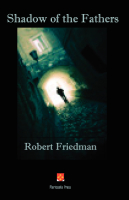
Shadow
of the Fathers.
By Robert Friedman.
ISBN:
978-0-915745-75-3.
2007. $22.95
In Shadow of
the Fathers, Robert Friedman turns a disturbing, possibly tragic historical
event in Puerto Rico into a captivating work of fiction. Personal obsessions and
public events collide as the novel's characters grapple with lies, false
identities, puzzling connections, U.S. wars and colonialism. A rich, suspenseful
tale, the novel moves from the colorful life of San Juan to the snow-covered
streets of New York, from the pastel heat of Miami to the fog-shrouded canals of
Amsterdam. Pablo Camino is the son of a doctor sent to Puerto Rico over four
decades earlier to research a cure for pernicious anemia. While there, Dr.
Cornelius Rhoads claimed in a letter to his close friend, "Ferdie" that he had
purposely killed eight of his Puerto Rican patients and planned to exterminate
several more of "that degenerate race." The letter was discovered and Rhoads was
forced to leave the island. He later insisted it was all a joke. Pablo, a highly
regarded Puerto Rican artist, is haunted by his dead father's past. Did the
doctor really kill those patients? Has Pablo inherited from him the feelings of
murder that often grip his own heart? When Pablo kills an intruder in his home,
he vows to finally discover the truth about the father he never knew -and about
himself. He flees Puerto Rico to look for Ferdie. Back on the island, Ralph
Camacho, Pablo's best friend, carries out his own search into a past that casts
heavy shadows on individual lives in the present.

Diadema.
Carlos Aceves. ISBN:
978-0-9796457-6-1 $24.95
Carlos Aceves has created an allegorical story rooted in the deepest essence of
the Latino soul. Diadema is a symbolic artifice very much like Doña Marina, La
Malinche, searching for her child, her very being. Knitted in a true story,
Aceves bring forward the Latino imperative of who really are we? What are our
roots? This is the Hispanic crucial element of understanding self. Latinos are
not alone. Spain if often called by Spaniards "the whore of Europe" for it was
invaded by most every group in Europe creating a concatenation of races and
cultures; today there are over five different languages spoken there. Latinos to
a certain extent inherited this dilemma, and Aceves attempts to use fiction
weaved in reality to address the Latino, Chicano predicament of
self-preservation and self-understanding. Aceves propounds a clear lyric message
begin your journey for
genuineness and
self-understanding and let the road lead you where it may: "Se hace camino al
andar." Roberto Cabello-Argandoña, Editor.

Unamuno: A Lyrical Essay.
By Pedro Blas González. ISBN:
978-0-915745-75-3
$22.95
The most
extraordinary and exemplary piece of Latino prose writing, bordering in Rational
lyricism. Scholarship and art in Europe, traditionally crisscrossed each other,
particularly when the brightest minds where at it. Germany has Goethe, the
Hispanic world has Unamuno. Both were consummated philosophers and creative
writers, who left indelible marks, both in culture and philosophical
argumentation. Goethe's "Werther" is credited with initiating Romanticism in
Europe. "El Sentido Trágico de La Vida" ponders the ever-present human (and
Hispanic) preoccupation for life, death and beyond, immortality. However, it
takes a Latino scholar to analyze, scaffold, and present in an very
understandable way to us the grandiosity of Unamuno's philosophical concerns and
his scrupulous argumentation. Dr. Pedro Blas González is the first Latino
scholar to elaborate and deconstruct Unamuno's philosophical work and related
creative writings. This is a lyric work of prose, as well as of literary
criticism, philosophical analysis, and pure rigorous Latino erudition advancing
Hispanic thinking. Roberto Cabello-Argandoña, Editor.

Waves
of Recovery: The Life of an Advocate of Latino Civil Rights .
By Maurice Jourdane.
ISBN:
978-0-915745-95-1
$26.95
This a riveting personal account of Maurice Jourdane--currently a Superior Court
Judge and a member of Jerry Brown's California Attorney General's
Office--leading to his legal representation and advocacy for farm workers and
César Chávez's organizing efforts. Mo's life reads like a Greek mythic tale in
which the hero suffers and endures moral and physical affliction in his quest,
his now legendary legal fights and successes against the powerful California
growers and agricultural interests in court. This biography is a testament to
human strength in behalf of justice for Latinos. The success of César Chávez's
civil rights movement and union organizing efforts cannot be fully understood
without knowledge of the life and sacrifices of Maurice Jourdane, El Cortito.
His legal successes, at great personal costs, solidified Chávez's leadership and
prepared the way for the consolidation of the Farm Workers' Union, and
ultimately for the farm workers to prevail against the powerful political and
economic interests of the California growers. Roberto Cabello-Argandoña, Editor.

Latina Filmmakers and Writers: The Notion of Chicanisma Through Films and
Novellas .
Jenny Dean.
ISBN:
978-0-9796457-1-6.
$26.95
During the Chicano Movement in the 1960s and 1970s, Chicanas helped Chicanos
achieve equal rights, while at the same time suffered oppression as women wihin
their own race. In the 1970s, the Chicana Feminist Movement was founded to
address the specific needs of Chicanas as women of color in the United States.
Chicana artists began to write and produce works in which Chicanas were given a
proper name, voice, and image. Soon, Chicanisma, a sense of sisterhood and
feminist discourse, emerged to confront the triple oppression of race, class,
and gender. Latina Filmmakers and Writers: The Notion of Chicanisma Through
Films and Novellas examines the works of seven celebrated Latinas who
collectively represent a 20-year history of Chicanisma: Chicana (a film by
Sylvia Morales), Puppet: A Chicano Novella (a book by Margarita Cota-Cárdenas),
La Ofrenda: The Days of the Dead (a film by Lourdes Portillo and Susana Muñoz),
Paletitas de Guayaba (a book by Erlinda Gonzáles-Berry), El Espejo/The Mirror (a
film by Frances Salomé España) and Loving Pedro Infante (a book by Denise Chávez).
These works demystify masculine power and offer realistic portrayals of Chicanas
and give them a rightful name, image, and voice in American culture.

Huevos y la Mujer Latina: The De-masculinization of the Macho. Julián
Camacho-Segura .
ISBN:
978-0-9796457-4-7
$19.95
Huevos is not a politically correct articulation of the plight of Latino
men in this era of so called gender equity and diversity. The author
contends that while White women have made progress, Latinos,
particularly Mexican men, have been entirely ignored by the
institutions', both governmental and private; they have become the
epitome of the poor working class. Ambitious and upward mobile Latinas
often look down upon Latinos, and particularly Mexican males' lackluster
economic success preferring other males. Latino males have been left out
of any gender or racial discussion, yet suffer the highest work related
death rates, lowest college attendance and graduation rates, high
incarceration rates, the highest poverty even though they have the
highest labor participation rates. The Latino male have become the
Sisyphus of America, condemned to low wages by globalization, to
ignorance by mediocre, highly-unionized and low-performing public schools, and destined to be
marginalized of any equity-political-solution.
"An exciting and enthralling design to educate the body and stimulate
the mind. Destined to be one of the most discussed books in 2007!" Oscar
Barajas, Author of soon to be realized book "Tales From The Wireless
Clothesline."

Clásicos de la Literatura Hispanoamericana Colonial en su Contexto
Sociohistórico .
Dr. Clary Loisel.
ISBN:
978-0-915745-97-5.
$24.95
A clear and concise review
of the most important Latin American Colonial writers whose work departed from
Peninsular literary canons.
Esta monografía va dirigida a los lectores que ya tienen un conocimiento básico
de la literatura hispanoamericana colonial pero que quieren un análisis más
profundo de algunas obras principales del canon. Este libro sobre la literatura
colonial constituye un esfuerzo por reunir el testimonio de nueve escritores de
los siglos XVI y XVII que han expresado algunas experiencias y vicisitudes
principales de varios pueblos de Hispanoamérica para acercarse a su identidad
nacional y artística. Seleccioné a estas figuras por sus contribuciones únicas a
las letras hispanas. El tema central de este libro es la transformación y la "nativización"
de los modelos peninsulares por los escritores del Nuevo Mundo. Es mi esperanza
que, volviendo a estudiar a estos autores y obras, podamos comenzar a comprender
mejor una pequeña parte de la enorme producción literaria de los dos siglos
después de la llegada de Cristóbal Colón en 1492. Divido el libro en dos partes
principales: "El Siglo XVI: Literatura de la Conquista" y "El Siglo XVII: El
Barroco, Arte Hispánico". Al principio de cada parte hay una introducción sobre
el marco histórico-social así como de las corrientes estéticas de cada época.
Cada uno de los nueve capítulos se dedica a las biografías y al análisis de la
obra de los autores seleccionados: Hernán Cortés, Bernal Díaz del Castillo,
Alonso de Ercilla y Zúñiga, El Inca Garcilazo de la Vega, Bernardo de Balbuena,
Juan Ruiz de Alarcón, Juan del Valle Caviedes, Carlos de Sigüenza y Góngora y
Sor Juana Inés de la Cruz.

Café Chronicles. Francisco J. Zermeno.
ISBN:
978-0-915745-98-2
$17.95
Life is wonderful, and I have learned from it twice, my first 12 years in
México, in Spanish, and the many others in California, in English. I know that
every one has a unique life, but I could claim that mine has been a bit more
unique. Why? I am a 6'4" café Mexican, that's why! In a land of chaparros, there
I was in México. In a land of whites, here I was, and am. I was born in the high
sierras, then was transplanted to urban Guadalajara. I survived. Then, I went
back to the rural sierra, and this now city slicker couldn't rope a cow,
especially in my black shoes. Heck, I tried playing soccer in México. Too tall. I
tried playing soccer in the USA, there was none in the 1960s. So, when I went
into basketball, my feet were faster than my hands on concrete. Shooting? A
slingshot at a bird, ok, but a ball at a basket? I went to the fields. Have you
ever tried short hoeing lettuce or picking strawberries from my height? I had my
gringo phase. Result? I couldn't even convince mother, who kept telling me,
'gringo culo prieto' - with Mexican motherly tender love, of course.

Chat
Room & other Latino Plays. Leo Cabranes-Grant. ISBN:
978-0-9796457-5-4 $22.95
" ...That's one very
important reason why this new line from Floricanto Press exists: to provide
Latinos/as and other readers, writers, and interviewers with GLBT writers of
quality who will provide significant work about the Latino-American gay
experience. Writers like Leo Cabranes, whose plays Floricanto is putting out, in
effect, leading the way. Leo addresses the issue: what does it mean to be a
Latino-American in the U.S? How does the color of your skin, or your accent, or
any of a dozen of perceived differences affect not only how you may be
treated-demonized, vilified, adored, iconized-but also how you come to perceive
yourself? And how does that change who you become? In Mortality, the changing
and changeable nature of Latino American GLBT identity becomes a toy played with
by the characters and the author to express and illuminate the underlying
anxiety that this topic always incites. And we've not yet begun to explore other
themes of this writing: machismo versus homosexuality, male versus female, and
how or even why that should alter to catch up to the rest of the world. Or the
role of the various religions-Catholicism versus Santeria for example-that are
touched upon in these works. So much to read. So much to think of. Meanwhile
welcome to this new line of Floricanto gay Hispanic books. I hope you enjoy the
work, as much as I've enjoyed it." Felice Picano

Papi
Chulo.
Dr.
Carlos T. Mock. ISBN:
978-0-9796457-0-9
$24.95
"If self-identity is a crucial issue in this literature, then national identity
is what Carlos Mock addresses; and Papi Chulo, actually is the story of a
country as seen through the eyes and lives of three strong women of several
generations. For Carlos Mock, the theme is felt so strongly that it must be
openly expressed. "
To Puerto Ricans, I've become an American. But to Americans
of Puerto Rican descent, I'm insufficiently Puerto Rican because I've not
undergone the years of prejudice they have." So the question becomes, who are
any of these characters, these authors, these people? And we've not yet begun to
explore other themes of this writing: machismo versus homosexuality, male versus
female, and how or even why that should alter to catch up to the rest of the
world. Or the role of the various religions-Catholicism versus Santeria for
example-that permeates in the novel. So much to read. So much to think of.
Meanwhile welcome to this new line of Floricanto gay Hispanic books. I hope you
enjoy the work, as much as I've enjoyed it." Felice Picano

Diversity:
Mestizos, Latinos and the Promise of Possibilities.
By Amardo Rodríguez. 978-0-915745-92-0
$18.95. 152 pages
This
book is about the hope that resides in brown, the color of creation. It defines
brown ideologically rather than racially. That is, brown is about peoples who
are increasingly defying the borders of ethnicity, nationality, sexuality, and
race that limit imagination and possibility through various anxieties,
insecurities, and paranoia that make us afraid of the world's ambiguity,
mystery, and complexity and, in so doing, make us afraid of our differences. It
is about peoples who are of borderlands-conceptual, communicational, relational,
communal, theoretical, and cultural spaces, such as Spanglish and Ozomatli,
which are devoted to possibility. Thus in a world where too many believe in a
coming clash of civilizations and that Latino immigration poses the most serious
threat to the prosperity of the U.S., this book introduces and expounds on
various theoretical notions that make for new visions of the world and
ultimately new ways of being the world.

La Gringa. By Pedro
Martínez.
ISBN:
978-0-915745-94-4. 428 pgs. $25.95
Joe García, a Marine Colonel and childhood friend devoted to
the President, La Gringa is also told from multiple points of view that
push at the edges of literary tradition.
By the age of fifteen Jade Stewart was
uncontrollable, and her wealthy, widowed father, David Stewart, takes her from
the family estate in New York to his ranch in South Texas. In Laredo Jade
Stewart becomes involved with Beto Guerra, a Chicano mix of Elvis and James
Dean. At the age of seventeen, Jade Stewart has a child out of wedlock by Beto
Guerra who had enlisted in the Marines and not returned from the wars of the
Middle East. The day after the child’s birth, David Stewart tells Jade that her
baby boy had died. After her election eighteen years later, President Stewart’s
enemies, the terrorist Christian Militias, steal the records of her child’s
birth and presumed death. Threatening to charge that the President had had an
abortion, they attempt to blackmail her. The President sends Joe García to
Laredo to recover the evidence that her child had died the day after birth.
Embedded with compelling characters from across the spectrum of the American
narrative, La Gringa is an imaginative and disturbing vision of what the
future may bring. Sprung tightly by metaphor at the beginning, the plot springs
to a violent conclusion, as Joe Garcia follows a trail that skirts taboo, tests
his loyalty to the Anglo America of Jade Stewart, and careens towards Monarchy.

Soul Twins: A Latino
Journey From The Edge To Self-redemption.
By Oscar Vega
Romero. ISBN
978-0-915745-93-7. $22.95 162 pages.
I asked myself what I wanted for my
future and I realized I desired many things. However, their
realization within the context of my current lifestyle seemed
impossible for I had no concept of the meaning of life. I was living
life like a blind man without the ability to see or to enjoy each
moment of my existence. I made mistakes that caused me to be locked
up behind bars. I've had to spend part of my life in the chaos of an
institution, far away from my home country and my loved ones. I
thought I was a failure. I didn't know who I could become. I finally realized that no matter what
situation I was in I was still blessed in so many ways. One of the
greatest blessings was the ability to make choices. This
understanding helped me to open my eyes little by little. The
quality of my existence began to change, not only for me but for
others around me. I discovered the joy of sharing my new-found
positive thinking with the intent of making others smile.

Latina Mistress.
By R.F. Sánchez 978-0-915745-91-3.
332 pgs. $24.95
This story is
about young and pretty illegal alien women
in El Paso, Texas, who unknowingly fall or
conveniently acquiesce to the sexual demands
of their Anglo male employers. Much what has been
written about El Paso and the southwest is
about its history, its settlers, its movers
and its heroes. Latina Mistress, however, is
about ordinary people, illegal
aliens, their loves, hates, beliefs, and
more importantly their circumstances. The
events which take place in the novel
intersect the Hispanic and Anglo worlds,
with their own good and evil characters.
This novel follows the long tradition of
historical fiction in the sense that all the
anecdotes told here are actually true,
although the names have been changed to
protect the guilty. The author gathered
these very human stories through years of
observation as well as personal experience
and much research.
Amazon.com Bestseller!!!

Mosaic
Virus. By Carlos T. Mock, M.D. 9780915745798 $24.95
It is 1983. In
Rome, Cardinal Siri, the most powerful
Cardinal in the Vatican, summons a young
Jesuit priest and assigns him a grave and
urgent task. The Vatican has been keeping
secret an epidemic of deaths among priests
in the northeastern United States. Father
Javier Barraza must determine how and why
they are dying-and whether a suspected
international conspiracy against the Holy
Roman Church is coming to fruition. Barraza
is an Argentinean who has risen swiftly
through the ranks to the post of Devil's
Advocate-an investigator of candidates for
sainthood. In his new assignment, his path
immediately intersects with Lillian
Davis-Lodge, a special agent with the FBI,
and a compelling figure from Barraza's past.
The reappearance of Lillian is more than
mere coincidence; she is far from the
"special agent" she claims to be. She
occupies the highest echelons of power in
the United States, with full access to
information and influence. Secrets and spies
inhabit the subterranean world of the Church
just as they do the government of the United
States, and a disturbing trail of evidence
strongly indicates to Barraza that his
Church may be complicit in what he has been
assigned to investigate. Set in the arcane,
yet alluring world of the Vatican, The
Mosaic Virus will grip you in its
terrifyingly-true-to-life tale of secrets,
sex and violence. At the end, you'll pray
that it's only fiction. Carlos Mock's maiden
voyage proves he is already a master
storyteller.
Laura S. Washington Ida B.
Wells-Barnett University Professor, DePaul
University Columnist, Chicago Sun-Times

Notes From Exile.
By T.M. Spooner. 978-0-915745-89-0
302 pgs. $24.95
Rich in language and imagery, Notes from Exile is a
skillfully crafted novel. A blend of humor and drama thread this tale,
concluding in what can best be described as a haunting modern tragedy. Struggles
both large and small remind us of human frailties and how in the final analysis,
we go it alone. For its wit and passion, this novel should not be missed! Mexico
has long been a land of enchantment and mystery, a place where more than one
foreigner has sought refuge, fleeing real or imagined demons. In a quaint
village along the shores of Lake Chapala, two recent college graduates join two
men living in self-imposed exile. One, a journalist and jaded philosopher is
escaping an inherited family destiny; the other, a British combat veteran is
fleeing what many viewed an unnecessary war. Notes from Exile is a venerable
creation, containing humor, love, and sorrow - each in their own time and
measure, all ingredients for a story of escape and hope. Through the novel we
learn, often harshly, how each one of us is responsible for defining our
destiny. The dilemma is that while some will succeed, others will tragically
fail.

Latina
Instinct .
By Michel Estrada. Translated by Robert Nasatir.
ISBN:978-0-915745-71-5. $24.95
In Michel Estrada's Latina Instinct, Carmen
leaves her modest life in rural Pinar del Río to attend the University of
Havana. When she gets there, she confronts the harsh reality of contemporary
Cuban life. Latina Instinct is an exceptional document of daily life in today's
Havana, faithfully recording the challenging existence of university students
struggling to make the grade. Before she can learn from her trials, Carmen must
mature amidst the dangerous and complex streets of Havana. Michele Estrada's
novel offers the first honest and riveting glance to present-day Cuban urban
life.
She
attends the University to study computer science but the politics of academic
life and the demands of school are quickly upstaged by the excitement and danger
of Havana. She rooms with a group of experienced students who teach her how to
get along: studious Paula, playful Dunia, naïve Monica, and Lili, the
free-spirit. And the men in Carmen’s life are equally important: Arturo, the
womanizing fifth-year student, and Sebastián, the debonair Spanish businessman.
When Carmen first meets them, she is gullible, but each teaches her a valuable
lesson by example, and they are not always good examples. She learns about
survival, both at school and in the city, but the most important lessons are
those that she can only learn on her own.

L atina
Icons:
Iconos
Femeninos Latinos e hispanoamericanos.
Edited by María Claudia André. La Mujer
Latina Series
ISBN: 978-0-915745-85-2. $26.95
This
book brings the most prominent Latina icons, popular female figures, and offers
the most important clear description of the process of iconization of
famous
cherished Latin American women.
It attempts to define and
provide meaning to these notable women within the context of popular symbols and
the function these women played in the construction of their individual
and collective Latina identity.
La Malinche, the movie actress María Félix, Sor Juana Inés de la
Cruz, María Ilonza, Frida Khalo, Selena, Yemayá, Carmen Miranda, and
Malena, the woman object of a most notable Tango, are among the
figures discussed in this highly recommended book.
Esta colección de ensayos explora los procesos de representación
y de iconización de algunas de las figuras femeninas más prominentes de América
Latina. En ella se intenta definir qué significado tienen estas figuras dentro
del contexto popular y determinar cuál es la función que desempeñan en la
construcción de una identidad colectiva e individual.
La Malinche, la actriz del cine María Félix, Sor Juana Inés de la Cruz, María
Ilonza, Frida Khalo, Selena, Yamayá, Carmen Miranda, y Malena, la mujer centro
del tango mas famoso escrito, son las figuras femeninas aquí discutidas
extensivamente en este extraordinario libro.

Borrowing Time: A Latino
Sexual Odyssey. By Carlos T. Mock, M.D. 978-0-915745-77-7 Paperback $24.95 300 pgs.
Hardbound $35.00
"Whatever your orientation, no matter your ethnicity,
you'll never be the same after a journey through this odyssey. A vivid and
visceral portrayal of a sexual and political coming-of-age in today's
America-and beyond." Laura S. Washington, Ida B. Wells-Barnett University
Professor, DePaul University; Columnist, Chicago Sun-Times
"Gay literature is
rich in so many areas, yet we still have a need for strong stories from the
world of Latino culture-about family, about youth, about coming out, about
creating adult relationships, about AIDS. Now, Carlos Mock give us a strong
Puerto Rican story that deals with all these issues." -Patricia Nell Warren,
author of The Front Runner and The Wild Man.

Carnival King:
The Last Latin
Monarch. By Brent Alan James.
ISBN:
978-0-915745-78-4.
Floricanto Press 2006. $22.95
In
April of 1993, Brazilian voters were given a choice between continuing with a
president, adopting a prime minister and parliament, or bringing back its long
dormant monarchy. Carnival King is the story of what might have happened had
they opted for the latter.
Outlawing
the G-string bikini on Rio de Janeiro’s beaches! Auctioning the country’s name
to the highest bidder! A police escort for thousands of shantytown dwellers as
they descend upon downtown Rio to call for freedom! These are just a few changes
one can expect when a nation bending under the strain of democracy decides to
give monarchy another try.
This
comedy about Brazilian politics and history rests on the premise that the 1993
plebiscite on what form of government voters preferred—parliamentary,
presidential, or monarchical—actually favored the latter. While the premise is
imaginary (voters actually favored presidentialism), James has captured the
cynical mood of Brazilian politics amazingly well and his characters – a cast
that includes reluctant monarchs, corrupt politicians, over-zealous cops, street
vendors, and denizens of Rio de Janeiro’s night life – jump off the page as true
life figures, recognizable to anyone who has spent time in Brazil. James
has a delightful narrative style and his characters speak in crisp, modern
dialogue. This is a thoroughly enjoyable story by an up-and-coming first author.
Michael
Conniff, Professor of Brazilian history, San José State University. Author of
Modern Brazil: elites and masses in historical perspective and Africans
in the Americas: a history of the Black Diaspora.

Luis Zapata.
The Strongest Passion.
Translated from Spanish by
Clary Loisel, Ph.D.,
2006.
ISBN: 0-915745-76-3
$23.95
Latino literature Mexican
fiction Gay literature Latino Gays Hispanic literature Latin
American Literature
Using only dialogue as its narrative
technique, Luis Zapata recounts the story of his protagonist Santiago, a
middle-aged businessman hopelessly in love with Arturo, a 19-year-old teenager,
who is the son of Sarita, his best friend. Through skillful and entertaining
dialogues during their courtship, which continue once the conquest is achieved,
the novel reflects the deep generational chasm between the characters. Santiago
is the completely dedicated representative of that mythical first generation of
gringos born in Mexico--but in a gay version--who cultivates values and pursues
goals in life and who believes in the middle-class version of national progress
through personal and individual commitment. Arturo, on the other hand, is the
typical postmodern teenager: pragmatic, addicted to working out, hedonistic,
vain to the point of being narcissistic, cynical to the point of being cruel,
and materialistic to the point of accepting money as the only God.
Thus, in The Strongest Passion,
Zapata shows us that if indeed there are “women who love too much,” there are
also “homosexuals who love too much.”


BRUNO ESTAÑOL:
The Collected Fiction.
Translation from the Spanish and preface by Eduardo Jiménez.
ISBN: 978-0-915745-84-5
$25.95
The
narratives collected in this volume are mainly set in Mexico,
during the turbulent time period running from the Mexican Revolution to the late
1950’s.
In one sense
we’re dealing with a dreamy, genteel, picturesque — though somewhat atavistic —
world, in which the paddlewheel steamboat remains the preferred means of
long-distance transportation, in which the townswomen wear ruffled organdy or
tulle dresses while daintily promenading, parasols in hand, around the town
square; where couples, young and old, dance on Sunday afternoons to the elegant
melodies of pasodobles, danzones, tangos or boleros; and where the finest
merchandise, ranging from the mundane to the exotic, arrives daily to the
various commercial ports along the Tabascan coast, having been shipped there
from the metropolises of New Orleans and Havana.

El Libro De Caló: The Dictionary of Chicano Slang.
Compiled by Harry Polkinhorn, Alfredo Velasco & Malcom Lambert. (pbk) ISBN 0915745194 $22.95. Includes index & concordance.
The most authoritative dictionary and guide to understanding
the dialect popularly spoken by Chicanos in the Southwest.
Caló has evolved in every decade since the 1940-1950s. It
became widely known as the language of the Pachucos, during
the Zoot-Suit Riots in Los Angeles. It
underwent much change during the Chicano Movement of the
1960s as Chicanos began to enter U.S. universities and
become exposed to counterculture and psychedelia. Caló words
and expressions became cultural symbols of the Chicano
Movement during the 1960s and 1970s, when they were used
frequently in literature and poetry.

Jalapeño Blues. By Trinidad Sánchez,
Jr. ISBN
978-0-915745-72-2
124 pgs. $14.95
"These poems
are not only full of heart, humor and joyful song; they are a history of
Chicanos and working class struggle. They give life to forgotten souls and pay
tribute to those "unrecorded in history." This is poetry that bursts off the
page demanding to be read aloud and with a little hip action. So I found myself
singing the jalapeño blues as loud as loud could be. Got the jalapeño blues,
baby. Yeah! We don't need no stinking badges telling us who we are. But we sure
need the poems in this book. Yes, indeed." Lolita
Hernández, Detroit, MI Author of Autopsy of an
Engine: And Other Stories from the Cadillac Plant.
Latino poetry Chicano poetry
Mexican American poetry Hispanic poetry

BRING ME MORE STORIES:
TALES OF THE SEPHARDIM
By Sally Benforado ISBN
0915745674
$22.95 (pbk)
In these short tales, author
Benforado weaves together the oral history of a
family of Sephardic Jews,
from their close knit home in Turkey to their new
lives in America. They are stories of a heritage
that spans the globe, of centuries-old traditions
transported to a different world, and of people who
held tightly to the ways of their ancestors, who,
like them, left their homes to settle in a strange
new land.
Following their exodus from Spain in
1492, Sephardic Jews were not allowed to remain on
Spanish territories in North
America, such as New Mexico and Colorado.
Bring Me More Stories
stands as a living testament to a people born of
their Hispanic ancestry, Jewish tradition and
immigrant experience.Gloria Golden,
Author of
Remnants of
Crypto-Jews Among Hispanic Americans.

Remnants of Crypto-Jews Among Hispanic Americans. By Gloria Golden,
Edited by Andrea Alessandra Cabello, University of California, Berkeley, and Sohaib Raihan. Floricanto Press. ISBN:
0-915745-56-9
Hidden deep in the heart of the American Southwest among the larger Hispanic
population are descendants of the Sephardim, Jews from Spain and Portugal. Five
hundred years after their expulsion from Spain remnants of Judaism are still
practiced within Southwestern Hispanic communities. Often unaware of their
origins, conversos have revealed, through oral history, how the ancestral faith
of the Crypto-Jews has been passed on from generation to generation.

La Picardía Chicana: Latino Folk Humor. Folklore Latino
Jocoso.
José R. Reyna,
Edited by Andrea Alessandra Cabello, University of California, Berkeley, with
the Assistance of Gloria Canales.
0-915745-42-9
$23.95
Latino folklore Latino jokes
Latino folk humor Folklore Latino
Folclor latino Mexican American Folk humor
Mexican
American, Chicano folk literature has been of interest to folklorists and been
collected incidentally, mostly as part of compilations of the longer and more
prestigious standard folktale. José Reyna began his collection of jokes 1969,
and some of the jokes compiled then, appeared in Stanley L. Robe’s Antología del
Saber Popular [1971]. -Kingsville [1972-77] and at
the University of New Mexico [1977-1984]. Others are synopses of jokes that Dr.
Reyna learned over the years and took the liberty of translating to English for
presentation here. This book represents the best of Mexican American joke
tradition.

Mexican Illegal Aliens: A Mexican American Perspective.
By Rafael D. Canul, Ph.D.
University of California,
Berkeley.
ISBN: 0-915745-62-3 $24.95
This book provides the first comprehensive socio-political,
economic and historical analysis from a Mexican American perspective of Mexican
illegal immigration to and Mexican immigrants and Mexican immigration in the United States during the last 50 years and how this
human influx impacts on current Mexican American politics and discourse, and
Hispanic Americans in general.
Latino books, Hispanic books, Mexican immigration, Mexican illegal immigration

The Illegal
Alien: A Dagger into the Heart of America??
By
Raoul Lowery Contreras,
Floricanto Press. ISBN:
0-915745-61-5
Edited
by Andrea Alessandra Cabello, University of California, Berkeley, and Sohaib
Raihan. $22.50
Illegal
Alien is the most reasoned analysis to date of the most controversial of illegal
immigration and its growing impact on the American economy and way of
life. Mr. Contreras makes a historical comparison of immigration and a
well-documented scrutiny of the vocal opinions of well-known anti-immigrant
spoke-persons as well as those who seek unrestricted openness of our borders.
"With impeccable logic, Raoul
Lowery Contreras demolishes the drivel emanating from anti-immigration fanatics
- the "knuckle-dragging element within the Republican Party," as he puts it. Yet
he is clear-eyed enough to also take on the "professional plantationeers" of the
radical Chicano movement and their liberal sponsors on America's campuses and at
activist "minority" groups. A cry for common sense from the radical center,
showing American Hispanics can - and must - punch to the left and to the right."
Roger E. Hernández Nationally Syndicated Columnist

CINCO DE MAYO: AN EPIC NOVEL.
Monreal, David. 1996 180p. (pbk) ISBN: 0-915745-48-8 180 pgs.$20.95; Price for class use
$15.95
Three-time award winner writer, Monreal brings life to the passionate, heroic, and
inspiring events that led to the Battle of Puebla on the 5th of May, 1862. His well
researched and well written historical novel brings in all the characters who played a
vital role in Cinco de Mayo.

CINCO DE MAYO: A SYMBOL OF MEXICAN RESISTANCE.
Cabello-Argandoña, Roberto, Luis Torres, Luis Leobardo Arroyo and Antonio Ríos-
Bustamante. Ser.: Nuestra Historia. 1997 178 pgs. ISBN: 0- 915745-43-7 Includes illus. and
biblio. $40.00 Price for class use $19.95
It probes the historical, political and international factors that led to the
Battle of Puebla of 1862 from pre-Independence to the War of In dependence,
international conflicts, War of Reform and the subsequent political and economic
crisis of Mexico.

MEXICAN AMERICAN IDENTITY.
Edited by Martha E. Bernal and Phylis C. Martinelli. 200 pgs
ISBN: 0915745690 Includes tables, biblio. $22.95.
MEXICAN
AMERICAN IDENTITY, edited by Martha E. Bernal and Phylis Cancilla Martinelli, is
the most outstanding collection of original research and analytical discussion
so far published that focuses on Mexican American ethnic identity, an important
dimension of ethnicity. This title is critical for educators and policy makers
who set policy or make decisions affecting the Latino/Hispanic community for it
provides an empirical and cognitive basis for understanding the idiosyncratic
characteristics of this group as a unique culture and vis-à-vis the larger
social context. Qui
ego sum? 'Who am I? and Qui tu
es? Who are you? These are basic human inquiries since earliest time of
civilization. This book discusses and
sheds light on the underlying dynamics determining and shaping identity and
self-image of the Mexican American as an individual and a social group. This
anthology is comprised of ten essays, whose topics range from historical
analysis of Mexican American identity; society's views of Mexican Americans and
how these images and perceptions influence ethnic identity; the identity of
Mexican American women, young children, adolescents. It also includes
discussions of the political and policy impacts of Mexican American identity in
cross-cultural and Anglo American, and dominant group settings. It is a seminal
contribution to the understanding of Mexican Americans, and Hispanic Americans.
Latino books, Hispanic books, Mexican immigration, Mexican illegal immigration.

The Salvation of La Purísima.
By T.M. Spooner. ISBN: 0-915745-55-0.
Hard cover $29.95.
Paperback
$20.95
The
Salvation of La Purísima, explores an anthropologist’s struggle with professional
objectivity as he is drawn into a crisis in a Mexican village. The chilling
and dramatic events will significantly change him. In the aftermath of a
death during a border-crossing attempt, a Mexican village desperately searches
for understanding and survival.
Compellingly
told and written – with tender regard for its characters.
T.M. Spooner’s debut novel, The Salvation of La Purísima, reveals
the forces driving migrants north and the resulting impact on the communities
and families left behind. The journey north is no longer just an economic
necessity, but has evolved into a right of passage for so many of Mexico’s rural
youth.
A
migrant he befriends draws the novel’s narrator, anthropologist Paul Westin, to
Mexico. As Westin becomes more involved with the migrants and learns of a
tragedy among them, he struggles to maintain professional objectivity. In
Mexico he encounters La Purísima, the fractured village and symbol of rural
Mexico, desperately struggling with the mysterious death of one of its own young
men. The strange and unexpected reactions of the villagers force Westin and a
local priest, Father Gabriel, to search for a solution to save La Purísima. The
Salvation of La Purísima,
contemporary and timely, is a story of superstition and faith, loyalty, and
ultimately the
survival of one small village. The novel leaves the
reader with a richer appreciation of the migrants, the human condition, and a
sense that something profound has been experienced.
About T.M.
Spooner
Spooner is a
frequent visitor to Mexico where he has traveled extensively. Many of his
summers are spent in Guadalajara, where much of this novel was written. Spooner
is a graduate of Northern Illinois University and attended graduate school at
DePaul University in Chicago. He lives near Chicago with his wife and two
daughters. The Salvation of La
Purísima can be purchased online at
www.floricantopress.com, www.amazon.com and www.barnesandnoble.com. T.M. Spooner
can be contacted at tmspooner2000@yahoo.com.

THE DRUGLORD.
Neissa, Peter A. 2004 210 pgs. (pbk) ISBN: 091574526 $22.95
It is the true life story of Gonzalo Rodriguez Gacha, the drug lord of the Bogota
branch of the Colombian Drug Cartel, this historical novel offers a factual and
knowledgeable Colombian perspective that well connected Colombians have known for years:
the real Drug Cartel, a group consisting of over two-hundred drug traffickers, met for the
first time in 1976, not to discuss drugs, but to devise a solution to the kidnapping and
murders inflicted upon them by the Marxist guerrillas. This led to cooperation on other
matters --like cocaine. The Drug Lord, born an outcast in 1952, during Colombia's bloody
civil war, rose from poverty to multi-billionaire status in the violent world of cocaine
traffic. It is the gripping story of the Drug Lord's history when at age six, he witnesses
the massacre of his family by the Colombian Army. It shows his involvement with the
adolescent city gang, El Centro, which controlled Colombia's lucrative emerald black
market, to the Cartel's development from a national to international status. The
Colombian Drug Lord,
very much like Mexican drug lords,
is also the story of a country (Colombia) torn apart by violence,
the war against drug --the oligarchy against the poor,
government against popular uprisings, drug massacres, social and class conflicts,
kidnappings-- of business, love and myopic U.S. policy in Latin America devoted to stamp
communism at any price. Mr. Neissa posits that the Colombian Drug Cartel is, like the
Mafia, deeply entrenched in their native cultures, and
eventually will survive war on drugs. Themes in this
biography are cocaina, cocaine, Colombian drug cartel,
drug trafficking, drug war,
Medellín, narcotráfico,
war on drugs, "columbian drug cartel." Most highly recommended.
You may also place your orders
through www.amazon.com
using the navigation bars.
|


