


|
|
|
|
ISSN 0732-8001 This important journal reviews in English the most significant English and Spanish language books recently published in Latin America, Spain, Mexico and the United States, which are of interest to U.S. Hispanics as well as the larger population. LECTOR is indexed by the Book Review Index. It reviews: Literary monographs of prose (novels and short stories) and poetry of the most prominent and promising Hispanic writers of all Latin America, Spain and the United States; Popular Fiction, such as mysteries, historical and contemporary novels, science fiction and adventure; Best Sellers and Classics, Latin American, Spanish, Hispanic American and the world’s best in translation. Social science and humanities books, except textbooks, such as sociology, history, women’s studies, ethnic studies, politics, language and linguistics, philosophy, and culture.Juvenile Young Adult Fiction and Nonfiction. Reference, such as dictionaries, bibliographies, biographies, encyclopedias. General Interest Books, such as cook-books, how-to, citizenship; and art.New Titles
The Cubans: Our Legacy in the United States chronicles the Cuban immigration to the United States from the 1800s to the present era. The author analyzes the impact the Cuban community has had on the cultural, economic, social, sports, and political scene in American society throughout multiple generations. Cuban immigrants have been one of the most successful communities in the United States. The book examines the contribution to baseball from Martín Dihigo to Tony Pérez and from Ernesto Lecuona to Gloria Estefan in music. In business circles the reader will discover that The Coca Cola Company, the Kellogg Company and McDonalds Corporation had Cuban-born Chief Executive Officers and that Movado watch company was owned by a refugee who fled communist Cuba. The book vividly depicts more than 250 extraordinary and intriguing men and women that make for engrossing and captivating reading. This informative and insightful work is highly recommended for Cuban-Americans, all Latinos and for those who enjoy reading about successful and trailblazing new Americans. Fernando "Fernán" Hernández is married and makes his home in Miami where he is a professor. He has written two Spanish-language books, Potaje (www.alexlib.com/potaje) and Lo que aprendí de mi perro (www.alexlib.com/miperro). His work also appears in the anthology Un Horizonte Literario: Poesías, Cuentos y Algo Más. It is puzzling how the memories of a nine year old child were kept intact to share with us more than forty years later some of his memories...virtually his feelings are so real you can touch the untouchable joy, pain, his love for his people, for his country of so long ago. Honoring his roots, the author goes on a journey traveling from years past to the present time. While reading the pages I found dedication, precise statistics, as well as stories that come alive of a great number of people that forced by destiny had to redirect their lives. These are the Cuban immigrants, some exiled by force, others born of these exiled people. Julie Pujol-Karel, Poet, Texa s.
The Secret of a Long Journey, A novel by Sandra Shwayder Sanchez ISBN: 978-1-888205-35-0 $22.95 The Secret of a Long Journey is the story of a cherished and dangerous secret, passed along from generation to generation through many lands and many perils: from Spain to Flanders across the ocean to Vera Cruz and up through the desert to what is now New Mexico. In magical realist style, this chronicle takes the characters through the terrors of the Inquisition, shipwrecks and hurricanes, sandstorms and wars, lost loves and illness, all culminating when Lois Gold, a passionate court advocate for the disenfranchised, discovers the legacy of her lost grandfather. "In The Secret of a Long Journey, Sánchez moves effortlessly through time and place with a mesmerizing plot. Generations come and go and each one propels the next. Her fascinating characters are solidly grounded in vivid natural or urban environments. Whether it is 16th century Flanders or 20th century Denver, you never lose the thread of the story, thanks to the author’s mastery of craft and her powerful imagination. The characters will lodge in your mind long after you’ve read the book . . ." Gloria DeVidas Kircheimer, author: Goodbye Evil Eye, and Amalie in Orbit.
Oro, Incienso y Mirra. By Ariel González Calzada. ISBN: 978-1-888205-40-4. 80 pgs. 2012 $9.50 Cuando le dije a mi esposa que "Oro, Incienso y Mirra" era un libro tanto para niños como para aquellos chiquillos de antaño que ahora son viejos ella sonrió dejándome desconcertado. He aquí el por qué de mi confusión: José, Patricia, y Pablo son tres niños que, como tantos en el mundo, sufren las consecuencias de una sociedad desigual. Sumergidos en sus universos de contradicciones ven por primera vez un árbol de navidad. Les pareció mágico. Siguiendo su rastro conocen a Rocío del Valle, una anciana que, medio siglo atrás, había sido una actriz famosa, sin embargo, ahora estaba abandonada. Junto a ella descubren a un Dios que, a pesar de estar prohibido, los ama. Aprenden que trabajar por amor es mejor que por dinero; y que, aunque no tengan nada, son tan importantes y únicos como aquellos que lo tienen todo ¡Un momento! Pensándolo mejor, ya entiendo para quienes escribí este libro: para los viejos que, víctimas de la sociedad, no pudieron ser niños, y para los niños que, por el mismo motivo, nunca llegaran a ser viejos. Ariel González Calzada. Obras publicadas: Samuel Máximo y Niketón; No Sapiens. Premios Literarios: -Primer lugar en el 4th Dallas Annual International Book Fair A Festival, 2009. -Primer lugar en la categoría: "Best Popular fiction, Spanish". 11th. Annual International Latino Book Award 2009 -Primer lugar en la categoría: "Best Young Adult Book, Spanish". 10th. Annual International Latino Book Award (Estados Unidos, 2008) -Segundo lugar en la categoría: "Mariposa, mejor primer libro". En el 10th. Annual International Latino Book Award (Estados Unidos, 2008) -Medalla de Plata, en el Florida Book Award 2007, en la categoría de "Spanish Book".
La revelación del Tercer Secreto de Fátima. By Jorge Cancino. ISBN: 978-1-888205-39-8. $24.95 Este libro sobre la vida de Miguel Ángel Poblete o Karole Romanov, y las apariciones de la Virgen María en Chile, revela un misterio que durante la dictadura de Augusto Pinochet hizo temblar a El Vaticano de Juan Pablo II. Los obispos tildaron el suceso de escandaloso y lo atribuyeron al Diablo. La Santa Sede respondió con un silencio activo: el entonces cardenal Joseph Ratzinger autorizó misas, permiso que mantuvo cuando fue electo Papa. Mientras el fenómeno era espiado por la CNI, las potencias en-viaron agentes para reunir evidencias. Los teólogos acusaron a Pinochet de fabricar la aparición para esconder las atrocidades del régimen; el gobierno dijo que los obispos crearon la 'visita' para sublevar al pueblo. 'La revelación del Tercer Secreto de Fátima' es el libro que todos esperaban desde el 13 de octubre de 1917. "Una obra imposible de esquivar. Penetra en los revestimientos religiosos, humanos y políticos desconocidos del vidente de Peñablanca". Carlos Saldibia, periodista freelance de El Mercurio, Santiago. "Impactante, reveladora. Una obra obligada para todos quienes se interesen en conocer un importante capítulo de la historia de nuestro país". Nicole Saffie, periodista de Al Damir, Chile. "Jorge Cancino abre una ventana de proyecciones inteligentes a quienes, en el futuro, se dediquen a estudiar la historia chilena". Solange Monteiro, periodista de América Economía, Brasil.
Jorge Cancino nació en Chile en 1956. En Guatemala fue jefe de redacción, profesor universitario, subdirector de la revista Polémica y agregado de prensa. Vive en Miami y trabaja en Univision.com. Además de ‘La Revelación del Tercer Secreto de Fátima’, es autor de ‘Las Flores del Coral Rojo‘, una colección de cuentos cuyos derechos de publicación fueron adquiridos por Floricanto Press.
Infinitas. By Carlos T. Mock. ISBN: 978-1-888205-38-1. $19.95 As a Puerto Rican living in the US, I no longer fit into my homeland. Every time I travel there, I'm considered un Americano. I'm always addressed in the English language. What's worse, my Puerto Rican friends who live on the Island don't seem to care about me anymore. I guess we've gone our separate ways--I've become too public with my homosexuality, while they endure best by living within the closet. On this side of the pond, in the United States, there are Puerto Ricans who have never been to Puerto Rico. They don't speak Spanish, they don't know our history or culture-yet, they declare themselves Puerto Rican. To them, I am less Puerto Rican than they because, in their eyes I didn't experience the same discrimination from the white culture while growing up as they did. So, where do I fit- what am I? I owe the answer to that question to my sister, Mayu-to whom I dedicate this book. As I cared for her and saw her cruel death arrive, unable to prevent it, I finally learned who I am. I am me, a special individual that is the sum total of all my experiences until now; no labels are needed to adequately describe me. Just like my sister-may she rest in peace-I will also turn into ashes when I die. This book tells some of my story, and because I think in both English and Spanish I decided to write it in both languages, to help those who still don't know who they are.
|
 |
Mujeres de Conciencia/ Women of Conscience. Spanish English parallel text and photography by Victoria Alvarado. ISBN: 978-0-9796457-7-8. 2008 $79.95 Oversize Hardbound.
This is an art book with magnificent black and white photos of prominent Latinas who have made definite and long standing contribution to the Hispanic community and the country at large. This photographic essay constitutes an important collective biography as well, with great journalistic insight and integrity into the lives of leading Latina women in the fields of education, science, literature, business, law, the arts, journalism, politics, and other fields of endeavor. This coffee table monograph, which has been published with art-book quality as a collector's edition, provides stunning artistic, B&W photographs of each subject with a parallel biographic journalistic essay in Spanish and English. The biographies explore the life-changing events of each subject, the personal mix of elements, circumstances, and values which allowed these women to set goals and objectives toward most successful careers and contributions to society. There are 72 leading women included in this collective biography and an extraordinary photographic essay offering the most incredible array of role models to inspire, guide and motivate young Latinas. This title is an important addition to reference collections and individual libraries for they are testament to the vision and values of la mujer Latina.


Operation Familia. By Donna del Oro. ISBN: 978-0-915745-96-8. 520 pages. $24.95
Dina Salazar likes to think she has it together. Dodging the bullet of early marriage and motherhood that every other female in her family has succumbed to, she’s her own woman. Or is she? Is she free ...or just lost?
Adventurous, athletic Dina has a satisfying career and her freedom from emotional entanglements. She has it all. All except the love of her life, Rick Ramos—THE HATED ONE--who ended up marrying another woman nearly six years before. All except the closeness of her blue-collar family, who live in a Latino barrio of Salinas, ninety miles south of Silicon Valley. All except the feeling of belonging to her cultural heritage. She speaks Spanish but who is she really? Is she a mixed mutt with an American mind and a Latino heart? In her attempts at educating herself and climbing the socio-economic ladder into the middle-class, has Dina lost her Latino heart and soul? Then, like an artichoke, Dina begins to peel away the secrets to get at the heart of her family. When Dina learns that her stern, disapproving Mexican-born grandmother has a shameful secret-- a son Grandma Gómez had to abandon in Mexico sixty years before-- Dina is reluctant at first to get involved. The uncle she has never known has died mysteriously-- killed, her grandmother believes, by a rival in the Juarez drug cartel. And Abuelita’s grand-daughter, Teresa--Dina’s Mexican cousin-- is in danger and is on the run. To Dina’s dismay, her grandmother urges HER to find out where her grand-daughter and great grandson are seeking refuge in Mexico. Her grandmother tells her that Dina is the only one that can rescue Teresa and her son, for Dina is the only one who speaks fluent Spanish. What’s a girl to do when la familia calls?
“A delightful, endearing story! You can’t help but root for Dina in her journey of self-discovery.” --Brenda Novak, Nationally Best-selling Author
“Dina is a character that many Latinos can identify with—a woman trying to weave her own place between cultures. Around Dina, Donna Del Oro has done her own weaving: a heady plot …of crime, romance, family conflict and intrigue.”
--Carlos Alcalá, Sacramento Bee Columnist
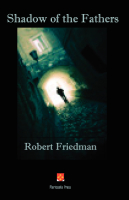
Shadow of the Fathers. By Robert Friedman. ISBN: 978-0-915745-75-3. 2007. $22.95
In Shadow of the Fathers, Robert Friedman turns a disturbing, possibly tragic historical event in Puerto Rico into a captivating work of fiction. Personal obsessions and public events collide as the novel's characters grapple with lies, false identities, puzzling connections, U.S. wars and colonialism. A rich, suspenseful tale, the novel moves from the colorful life of San Juan to the snow-covered streets of New York, from the pastel heat of Miami to the fog-shrouded canals of Amsterdam. Pablo Camino is the son of a doctor sent to Puerto Rico over four decades earlier to research a cure for pernicious anemia. While there, Dr. Cornelius Rhoads claimed in a letter to his close friend, "Ferdie" that he had purposely killed eight of his Puerto Rican patients and planned to exterminate several more of "that degenerate race." The letter was discovered and Rhoads was forced to leave the island. He later insisted it was all a joke. Pablo, a highly regarded Puerto Rican artist, is haunted by his dead father's past. Did the doctor really kill those patients? Has Pablo inherited from him the feelings of murder that often grip his own heart? When Pablo kills an intruder in his home, he vows to finally discover the truth about the father he never knew -and about himself. He flees Puerto Rico to look for Ferdie. Back on the island, Ralph Camacho, Pablo's best friend, carries out his own search into a past that casts heavy shadows on individual lives in the present.

Diadema. Carlos Aceves. ISBN: 978-0-9796457-6-1 $24.95
Carlos Aceves has created an allegorical story rooted in the deepest essence of the Latino soul. Diadema is a symbolic artifice very much like Doña Marina, La Malinche, searching for her child, her very being. Knitted in a true story, Aceves bring forward the Latino imperative of who really are we? What are our roots? This is the Hispanic crucial element of understanding self. Latinos are not alone. Spain if often called by Spaniards "the whore of Europe" for it was invaded by most every group in Europe creating a concatenation of races and cultures; today there are over five different languages spoken there. Latinos to a certain extent inherited this dilemma, and Aceves attempts to use fiction weaved in reality to address the Latino, Chicano predicament of self-preservation and self-understanding. Aceves propounds a clear lyric message begin your journey for genuineness and self-understanding and let the road lead you where it may: "Se hace camino al andar." Roberto Cabello-Argandoña, Editor.

Unamuno: A Lyrical Essay. By Pedro Blas González. ISBN: 978-0-915745-75-3 $22.95
The most extraordinary and exemplary piece of Latino prose writing, bordering in Rational lyricism. Scholarship and art in Europe, traditionally crisscrossed each other, particularly when the brightest minds where at it. Germany has Goethe, the Hispanic world has Unamuno. Both were consummated philosophers and creative writers, who left indelible marks, both in culture and philosophical argumentation. Goethe's "Werther" is credited with initiating Romanticism in Europe. "El Sentido Trágico de La Vida" ponders the ever-present human (and Hispanic) preoccupation for life, death and beyond, immortality. However, it takes a Latino scholar to analyze, scaffold, and present in an very understandable way to us the grandiosity of Unamuno's philosophical concerns and his scrupulous argumentation. Dr. Pedro Blas González is the first Latino scholar to elaborate and deconstruct Unamuno's philosophical work and related creative writings. This is a lyric work of prose, as well as of literary criticism, philosophical analysis, and pure rigorous Latino erudition advancing Hispanic thinking. Roberto Cabello-Argandoña, Editor.

Waves of Recovery: The Life of an Advocate of Latino Civil Rights. By Maurice Jourdane. ISBN: 978-0-915745-95-1 $26.95
This a riveting personal account of Maurice Jourdane--currently a Superior Court Judge and a member of Jerry Brown's California Attorney General's Office--leading to his legal representation and advocacy for farm workers and César Chávez's organizing efforts. Mo's life reads like a Greek mythic tale in which the hero suffers and endures moral and physical affliction in his quest, his now legendary legal fights and successes against the powerful California growers and agricultural interests in court. This biography is a testament to human strength in behalf of justice for Latinos. The success of César Chávez's civil rights movement and union organizing efforts cannot be fully understood without knowledge of the life and sacrifices of Maurice Jourdane, El Cortito. His legal successes, at great personal costs, solidified Chávez's leadership and prepared the way for the consolidation of the Farm Workers' Union, and ultimately for the farm workers to prevail against the powerful political and economic interests of the California growers. Roberto Cabello-Argandoña, Editor.

Latina Filmmakers and Writers: The Notion of Chicanisma Through Films and Novellas. Jenny Dean. ISBN: 978-0-9796457-1-6. $26.95
During the Chicano Movement in the 1960s and 1970s, Chicanas helped Chicanos achieve equal rights, while at the same time suffered oppression as women wihin their own race. In the 1970s, the Chicana Feminist Movement was founded to address the specific needs of Chicanas as women of color in the United States. Chicana artists began to write and produce works in which Chicanas were given a proper name, voice, and image. Soon, Chicanisma, a sense of sisterhood and feminist discourse, emerged to confront the triple oppression of race, class, and gender. Latina Filmmakers and Writers: The Notion of Chicanisma Through Films and Novellas examines the works of seven celebrated Latinas who collectively represent a 20-year history of Chicanisma: Chicana (a film by Sylvia Morales), Puppet: A Chicano Novella (a book by Margarita Cota-Cárdenas), La Ofrenda: The Days of the Dead (a film by Lourdes Portillo and Susana Muñoz), Paletitas de Guayaba (a book by Erlinda Gonzáles-Berry), El Espejo/The Mirror (a film by Frances Salomé España) and Loving Pedro Infante (a book by Denise Chávez). These works demystify masculine power and offer realistic portrayals of Chicanas and give them a rightful name, image, and voice in American culture.
"Dean provides a thoughtful and honest account of ... the concept of Chicanisma. Latina Filmmakers and Writers cleverly situates Chicana literature and film at the perilous yet unique intersection of class, gender and race ...and weaves a Chicana feminist theory and original oral history research " Guisela Latorre, University of California. Santa Barbara.
"This book deals with the voices and works of Latinas [whose voices]... must be heard since they elaborate on the concept of "Chicanisma."This is an important new book in the development of Chicana Studies and Latina thought. Kudos!" Dr. Luzma Umpierre, Human Rights Advocate.
"...This book... is a must read text for contemporary society. ...[it] will be most helpful in Chicana and Chicano Studies, Women and Feminist Studies, Ethnic Studies, and Cultural Studies in understanding the experiences and issues concerning diversity in a postmodern situation." Dr. T. Osa Hidalgo de la Riva

Huevos y la Mujer Latina: The De-masculinization of the Macho. Julián Camacho-Segura. ISBN: 978-0-9796457-4-7 $19.95
|
Huevos is not a politically correct articulation of the plight of Latino men in this era of so called gender equity and diversity. The author contends that while White women have made progress, Latinos, particularly Mexican men, have been entirely ignored; they have become the epitome of the poor working class. Ambitious and upward mobile Latinas often look down upon Latinos, and particularly Mexican males' lackluster economic success preferring other males. Latino males have been left out of any gender or racial discussion, yet suffer the highest work related death rates, lowest college attendance and graduation rates, high incarceration rates, the highest poverty even though they have the highest labor participation rates. The Latino male have become the Sisyphus's of America condemned to low wages by globalization, to ignorance by mediocre, highly-unionized schools, and destined to be marginalized of any equity-political-solution. The progress of White women has maintained White power by driving the diversity dialog, praxis, and remedy away from Latino males-the working, and uneducated poor. As Latino men have been relegated to a caste style social gender structure-the hard working indigent-Latinas have been blinded into believing that feminism and Chicanisma are positive, weakening Latino traditional social fabric and support system, while simultaneously ignoring the societal divide distressing Latinos, and especially Mexican males. "Huevos! Ya era hora! In an era of such political correctness, the timing couldn't be better. Once again Julian Camacho tackles the issues that are relevant in this truly academic discipline of Latino Studies." John J. Morales Jr. Chair and Professor of Chicano Studies, L.A. Mission College. "Julian Camacho's work is thought provoking and it is bound to create deep conversations and debate. Thank you for addressing the real challenges Mexican men face everyday in US society." Marcos Ramos, College of Letters and Science. University of California, Berkeley "An exciting and enthralling design to educate the body and stimulate the mind. Destined to be one of the most discussed books in 2007!" Oscar Barajas, Author of soon to be realized book "Tales From The Wireless Clothesline" |

Clásicos de la Literatura Hispanoamericana Colonial en su Contexto Sociohistórico. Dr. Clary Loisel. ISBN: 978-0-915745-97-5. $24.95
Esta monografía va dirigida a los lectores que ya tienen un conocimiento básico de la literatura hispanoamericana colonial pero que quieren un análisis más profundo de algunas obras principales del canon. Este libro sobre la literatura colonial constituye un esfuerzo por reunir el testimonio de nueve escritores de los siglos XVI y XVII que han expresado algunas experiencias y vicisitudes principales de varios pueblos de Hispanoamérica para acercarse a su identidad nacional y artística. Seleccioné a estas figuras por sus contribuciones únicas a las letras hispanas. El tema central de este libro es la transformación y la "nativización" de los modelos peninsulares por los escritores del Nuevo Mundo. Es mi esperanza que, volviendo a estudiar a estos autores y obras, podamos comenzar a comprender mejor una pequeña parte de la enorme producción literaria de los dos siglos después de la llegada de Cristóbal Colón en 1492. Divido el libro en dos partes principales: "El Siglo XVI: Literatura de la Conquista" y "El Siglo XVII: El Barroco, Arte Hispánico". Al principio de cada parte hay una introducción sobre el marco histórico-social así como de las corrientes estéticas de cada época. Cada uno de los nueve capítulos se dedica a las biografías y al análisis de la obra de los autores seleccionados: Hernán Cortés, Bernal Díaz del Castillo, Alonso de Ercilla y Zúñiga, El Inca Garcilazo de la Vega, Bernardo de Balbuena, Juan Ruiz de Alarcón, Juan del Valle Caviedes, Carlos de Sigüenza y Góngora y Sor Juana Inés de la Cruz.
"El lector se siente atraído a la lectura de Clásicos de la Literatura Hispanoamericana Colonial por la claridad de su presentación y por la curiosidad de ciertos detalles que me han animado a releer a algunos escritores de la literatura colonial, por ejemplo a Sor Juana Inés de la Cruz". Ramón Corro, Profesor de Español Emeritus; University of Montana.
"Este libro muestra de forma muy clara la transformación de los modelos literarios españoles realizados por diferentes autores en el Nuevo Mundo. Por lo tanto, puede servir como recurso útil para el profesor así como texto de trasfondo para el estudiante de letras renacentistas y barrocas". Robert S. Stone, Profesor Asociado; US Naval Academy.
"Clásicos de la Literatura Hispanoamericana Colonial , por el profesor Clary Loisel, es un aporte importante a los estudios hispanoamericanos coloniales. Es de gran utilidad para un público general y para especialistas". Mark Cox, Profesor Asociado de Español; Presbyterian College.
"Con Clásicos de la Literatura Hispanoamericana Colonial , Clary Loisel ha sabido abarcar las obras claves de la literatura colonial con la precisión y erudición necesarias para el especialista y con la claridad y llaneza para el gran público". Andre Moskowitz, City University of New York Graduate Center

Café Chronicles. Francisco J. Zermeno. ISBN: 978-0-915745-98-2 $17.95
Life is wonderful, and I have learned from it twice, my first 12 years in México, in Spanish, and the many others in California, in English. I know that every one has a unique life, but I could claim that mine has been a bit more unique. Why? I am a 6'4" café Mexican, that's why! In a land of chaparros, there I was in México. In a land of whites, here I was, and am. I was born in the high sierras, then was transplanted to urban Guadalajara. I survived. Then, I went back to the rural sierra, and this now city slicker couldn't rope a cow, especially in my black shoes. Heck, I tried playing soccer in México.too tall. I tried playing soccer in the USA, there was none in the 1960s. So, when I went into basquetball, my feet were faster than my hands on concrete. Shooting? A slingshot at a bird, ok, but a ball at a basquet? I went to the fields. Have you ever tried short hoeing lettuce or picking strawberries from my height? I had my grigo phase. Result? I couldn't even convince mother, who kept telling me, 'gringo culo prieto' - with Mexican motherly tender love, of course. I tried to fit in as a Freshman at UCSanta Bárbara. I was taking Bonehead English with Dr. Fernández. I couldn't. Heck, I've even made a run a city politics. Result? Missed it by 1,500 votes. The reason given me? Latinos don't vote. Yes, I wondered if the political machine is just not ready for a 6'4" Mexicaned café to join the elected elite. As a good Mexican, I have always adapted, fatallisticly, as is my, our, nature. Yes, I have always wondered if a caféless, tallless, USAless life would have been different. Yes. I think so. But this one's mine, and I'll keep it. So, what I have been doing is writing, and reading, kilos of words, from the outside looking in. It's been a two year plus weekly column, with what I've observed, with a café Latino consciousness. Some love it and learn from it. Others hate it and have told me to take my culo prieto back to México. Hey, is life wonderful or what? Hope you agree. Live on!

Chat Room & other Latino Plays. Leo Cabranes-Grant. ISBN: 978-0-9796457-5-4 $22.95
"It gives me great pleasure to introduce Floricanto's New Series: Latino GLBT works. In this edition, we have "The Chat Room and Other Latino Plays" which explores the complexities of Latino gay life through characters and events that challenge our expectations in both funny and disturbing ways. Several closeted men meet in a public space to flirt with each other, but end up discussing the joys and pains of fatherhood. A bisexual man surprises his gay partner with an unusual birthday gift: a Puerto Rican. A Latino-Rican decides to pursue a chat room date with a mysterious man that slowly takes over his apartment and even brings a woman in. All three plays are an invitation to revise our values and to experiment with new identities. " Carlos T Mock, MD "...That's one very important reason why this new line from Floricanto Press exists: to provide Latinos/as and other readers, writers, and interviewers with GLBT writers of quality who will provide significant work about the Latino-American gay experience. Writers like Leo Cabranes, whose plays Floricanto is putting out, in effect, leading the way. Leo addresses the issue: what does it mean to be a Latino-American in the U.S? How does the color of your skin, or your accent, or any of a dozen of perceived differences affect not only how you may be treated-demonized, vilified, adored, iconized-but also how you come to perceive yourself? And how does that change who you become? In Mortality, the changing and changeable nature of Latino American GLBT identity becomes a toy played with by the characters and the author to express and illuminate the underlying anxiety that this topic always incites. And we've not yet begun to explore other themes of this writing: machismo versus homosexuality, male versus female, and how or even why that should alter to catch up to the rest of the world. Or the role of the various religions-Catholicism versus Santeria for example-that are touched upon in these works. So much to read. So much to think of. Meanwhile welcome to this new line of Floricanto gay Hispanic books. I hope you enjoy the work, as much as I've enjoyed it." Felice Picano

Papi Chulo . Dr. Carlos T. Mock. ISBN Complete: 978-0-9796457-0-9 $24.95
"If self-identity is a crucial issue in this literature, then national identity is what Carlos Mock addresses; and Papi Chulo, actually is the story of a country as seen through the eyes and lives of three strong women of several generations. For Carlos Mock, the theme is felt so strongly that it must be openly expressed. "To Puerto Ricans, I've become an American. But to Americans of Puerto Rican descent, I'm insufficiently Puerto Rican because I've not undergone the years of prejudice they have." So the question becomes, who are any of these characters, these authors, these people? And we've not yet begun to explore other themes of this writing: machismo versus homosexuality, male versus female, and how or even why that should alter to catch up to the rest of the world. Or the role of the various religions-Catholicism versus Santeria for example-that permeates in the novel. So much to read. So much to think of. Meanwhile welcome to this new line of Floricanto gay Hispanic books. I hope you enjoy the work, as much as I've enjoyed it." Felice PicanoDr. Carlos Mock was born in San Juan, PR in 1956. After a career in Medicine, he turned to literature. Papi Chulo is his third novel. He currently edits Floricanto's LGBT Latino series

Diversity: Mestizos, Latinos and the Promise of Possibilities. By Amardo Rodríguez. 978-0-915745-92-0 $18.95. 152 pages
This book is about the hope that resides in brown, the color of creation. It defines brown ideologically rather than racially. That is, brown is about peoples who are increasingly defying the borders of ethnicity, nationality, sexuality, and race that limit imagination and possibility through various anxieties, insecurities, and paranoia that make us afraid of the world's ambiguity, mystery, and complexity and, in so doing, make us afraid of our differences. It is about peoples who are of borderlands-conceptual, communicational, relational, communal, theoretical, and cultural spaces, such as Spanglish and Ozomatli, which are devoted to possibility. Thus in a world where too many believe in a coming clash of civilizations and that Latino immigration poses the most serious threat to the prosperity of the U.S., this book introduces and expounds on various theoretical notions that make for new visions of the world and ultimately new ways of being the world.

La Gringa. By Pedro Martínez. ISBN: 978-0-915745-94-4. 428 pgs. $25.95
Joe García, a Marine Colonel and childhood friend devoted to the President, La Gringa is also told from multiple points of view that push at the edges of literary tradition.
The deciphering of the Da Vinci Code discovered Jade Stewart as the descendent of the Davidic Dynasty. Her existence threatens the legitimacy of Christian orthodoxy, and she is anathema to the Christian fundamentalists. Beautiful, brilliant and single, she is a controversial and charismatic President at a time of great change in America, including a schism between the American Catholic Church and the Vatican, the admission of English speaking Canada into the United States, and the political emergence of the Mexican-American community. Her election to the Presidency in 2008 is carried on the brown backs of Chicanos in Texas and California.
By the age of fifteen Jade Stewart was uncontrollable, and her wealthy, widowed father, David Stewart, takes her from the family estate in New York to his ranch in South Texas. In Laredo Jade Stewart becomes involved with Beto Guerra, a Chicano mix of Elvis and James Dean. At the age of seventeen, Jade Stewart has a child out of wedlock by Beto Guerra who had enlisted in the Marines and not returned from the wars of the Middle East. The day after the child’s birth, David Stewart tells Jade that her baby boy had died. After her election eighteen years later, President Stewart’s enemies, the terrorist Christian Militias, steal the records of her child’s birth and presumed death. Threatening to charge that the President had had an abortion, they attempt to blackmail her. The President sends Joe García to Laredo to recover the evidence that her child had died the day after birth. Embedded with compelling characters from across the spectrum of the American narrative, La Gringa is an imaginative and disturbing vision of what the future may bring. Sprung tightly by metaphor at the beginning, the plot springs to a violent conclusion, as Joe Garcia follows a trail that skirts taboo, tests his loyalty to the Anglo America of Jade Stewart, and careens towards Monarchy.

Soul Twins: A Latino Journey From The Edge To Self-redemption. By Oscar Vega Romero. ISBN
978-0-915745-93-7. $22.95 162 pages.Vega Romero contends “My view as a Mexican is that my people are hard workers who possess a strong desire to succeed in life. I was only one of the many Mexicans willing to face the prospect of death and of leaving a mother bereft, by crossing the United States border illegally, in the attempt to make their dreams reality. I left my country without knowledge of the many dangers involved, but with the help of God, I arrived in the United States of America, without authorization of the U.S. government.I asked myself what I wanted for my future and I realized I desired many things. However, their realization within the context of my current lifestyle seemed impossible for I had no concept of the meaning of life. I was living life like a blind man without the ability to see or to enjoy each moment of my existence. I made mistakes that caused me to be locked up behind bars. I've had to spend part of my life in the chaos of an institution, far away from my home country and my loved ones. I thought I was a failure. I didn't know who I could become.I finally realized that no matter what situation I was in I was still blessed in so many ways. One of the greatest blessings was the ability to make choices. This understanding helped me to open my eyes little by little. The quality of my existence began to change, not only for me but for others around me. I discovered the joy of sharing my new-found positive thinking with the intent of making others smile.This book is designed to help men and women improve their lives through positive ideas and the true experiences from which they came. The heartfelt honesty and passion that I have put into this book convinces me that it has the power to touch any heart, no matter the race or color of skin. Mexicans and Latin Americans will continue to be my inspiration to write and paint. My hope is that my writing encourages people to share precious values and to extend a hand to anyone. We know who we are but not who we can become.”Oscar Vega Romero was born and raised in Mexico. He was the second child in a family of six sons and a daughter. His parents, a hard-working laborer father and a home-maker mother, impressed upon him the importance of education and setting a good example. Romero immigrated to the United States in 1998. He is a videographer, an artist, and a writer who uses his artistic talents to teach, entertain, and make others more aware of their hidden potential.
 NEW
NEW
Latina Mistress. By R.F. Sánchez 978-0-915745-91-3. 332 pgs. $24.95
This story is about young and pretty illegal alien women in El Paso, Texas, who unknowingly fall or conveniently acquiesce to the sexual demands of their male employers, who most happen to be Anglo Americans. Much what has been written about El Paso and the southwest is about its history, its settlers, its movers and its heroes. Latina Mistress, however, is about ordinary people, illegal aliens, their loves, hates, beliefs, and more importantly their circumstances. The events which take place in the novel intersect the Hispanic and Anglo worlds, with their own good and evil characters. This novel follows the long tradition of historical fiction in the sense that all the anecdotes told here are actually true, although the names have been changed to protect the guilty. The author gathered these very human stories through years of observation as well as personal experience and much research. The author and his wife, Helen, actually knew personally Berta, one of the tragic heroines of this novel. He also interviewed scores of males and females of both cultures attesting to the accuracy of the story. What is a young and beautiful illegal alien to do to survive two alien worlds, the Hispanic and Anglo worlds, with their own good and evil characters? The answer is shivering in its clarity: whatever is required. This novel depicts the dramatic lives of two beautiful sisters, both illegal aliens, and how some people take advantage of their weakness and their sex. In this sense this novel is a classic tale of what has always occurred with the disadvantaged all along; the powerful taking advantage of the weaker and more disadvantaged members of society. Although the novel starts with the arrival of the two pretty young women in the United States, dramatic events unleashed, which change the lives of these women. Some of these circumstances are simply traumatic, others are downright heart-breaking, and some others are happy events, which they must undergo before setting roots in this country. As in real life, not every immigrant coming to the United States makes it, in this novel; Rosario did, but not her sister, Berta. Some characters in this novel are truly loveable, others quite detestable; all nevertheless are quite human. The reader weeps at times, is angry at times, rejoices at times, but at the close you will find a new meaning for what is meant for a Latina Mistress.
Amazon.com Bestseller!!!
 NEW
NEW
Mosaic Virus. By Carlos T. Mock, M.D. 9780915745798 $24.95
It is 1983. In Rome, Cardinal Siri, the most powerful Cardinal in the Vatican, summons a young Jesuit priest and assigns him a grave and urgent task. The Vatican has been keeping secret an epidemic of deaths among priests in the northeastern United States. Father Javier Barraza must determine how and why they are dying-and whether a suspected international conspiracy against the Holy Roman Church is coming to fruition. Barraza is an Argentinean who has risen swiftly through the ranks to the post of Devil's Advocate-an investigator of candidates for sainthood. In his new assignment, his path immediately intersects with Lillian Davis-Lodge, a special agent with the FBI, and a compelling figure from Barraza's past. The reappearance of Lillian is more than mere coincidence; she is far from the "special agent" she claims to be. She occupies the highest echelons of power in the United States, with full access to information and influence. Secrets and spies inhabit the subterranean world of the Church just as they do the government of the United States, and a disturbing trail of evidence strongly indicates to Barraza that his Church may be complicit in what he has been assigned to investigate. Set in the arcane, yet alluring world of the Vatican, The Mosaic Virus will grip you in its terrifyingly-true-to-life tale of secrets, sex and violence. At the end, you'll pray that it's only fiction. Carlos Mock's maiden voyage proves he is already a master storyteller.
Laura S. Washington Ida B. Wells-Barnett University Professor, DePaul University Columnist, Chicago Sun-Times A virus, man-made and swiftly lethal, has killed the priests, and a Cardinal in the United States is involved. As Barraza uncovers more about the role of his Church and the true origin of its laws about celibacy and its gay priests, he begins to fundamentally question his allegiance to Rome and to the doctrines of his faith. When he and Lillian find the creators of the virus, they find themselves in a desperate game of wits with faceless, mysterious, all-powerful institutions looking to protect their public image at all costs. Javier and Lillian are expendable, and even Lillian cannot protect them.

Notes From Exile. By T.M. Spooner. 978-0-915745-89-0
302 pgs. $24.95Rich in language and imagery, Notes from Exile is a skillfully crafted novel. A blend of humor and drama thread this tale, concluding in what can best be described as a haunting modern tragedy. Struggles both large and small remind us of human frailties and how in the final analysis, we go it alone. For its wit and passion, this novel should not be missed! Mexico has long been a land of enchantment and mystery, a place where more than one foreigner has sought refuge, fleeing real or imagined demons. In a quaint village along the shores of Lake Chapala, two recent college graduates join two men living in self-imposed exile. One, a journalist and jaded philosopher is escaping an inherited family destiny; the other, a British combat veteran is fleeing what many viewed an unnecessary war. Notes from Exile is a venerable creation, containing humor, love, and sorrow - each in their own time and measure, all ingredients for a story of escape and hope. Through the novel we learn, often harshly, how each one of us is responsible for defining our destiny. The dilemma is that while some will succeed, others will tragically fail. Excerpt from Notes from Exile - In the vigilant distance, the jacaranda trees and the African tulips remained still and breathless. The long, fragile egrets waded in the muddy shores of the great lake. Lirio acuático, water hyacinth, and tules, water rushes, nursed in the shallow water, their roots a web of thickness and lust. The lake was sick, dying of a disease called neglect. The mountains nestled beside it, powerless to heal, and the long, loping line of the woman cradled it in her lap. She had bravely turned to face the deprivation. Fishers, naked to the waist, cast their wide nets, each harvest more meager. What a disease this thing called neglect.
 New
New
In Michel Estrada's Latina Instinct, Carmen leaves her modest life in rural Pinar del Río to attend the University of Havana. When she gets there, she confronts the harsh reality of contemporary Cuban life. Latina Instinct is an exceptional document of daily life in today's Havana, faithfully recording the challenging existence of university students struggling to make the grade. Before she can learn from her trials, Carmen must mature amidst the dangerous and complex streets of Havana. Michele Estrada's novel offers the first honest and riveting glance to present-day Cuban urban life.
She attends the University to study computer science but the politics of academic life and the demands of school are quickly upstaged by the excitement and danger of Havana. She rooms with a group of experienced students who teach her how to get along: studious Paula, playful Dunia, naïve Monica, and Lili, the free-spirit. And the men in Carmen’s life are equally important: Arturo, the womanizing fifth-year student, and Sebastián, the debonair Spanish businessman. When Carmen first meets them, she is gullible, but each teaches her a valuable lesson by example, and they are not always good examples. She learns about survival, both at school and in the city, but the most important lessons are those that she can only learn on her own.
Over the course of a year, Carmen encounters good and bad relationships, short-lived and lasting friendships. Her innocence leads her into difficult situations, but her wits, and a little luck, get her out of them. Along the way, Carmen changes from an innocent country girl thrown into the big city to an experienced and savvy young woman equipped to face the challenges of present-day Cuba.

El Libro De Caló: The Dictionary of Chicano Slang
Compiled by Harry Polkinhorn, Alfredo Velasco & Malcom Lambert 1988 100 pgs (pbk) ISBN 0915745194 $25.95. Class use $17.95 Includes index & concordance.

Latina Icons: Iconos Femeninos Latinos e hispanoamericanos. Edited by María Claudia André. La Mujer Latina Series ISBN: 978-0-915745-85-2. Floricanto Press, 2006. $26.95
This book brings the most prominent Latina icons, popular female figures, and offers the most important clear description of the process of iconization of famous cherished Latin American women. It attempts to define and provide meaning to these notable women within the context of popular symbols and the function these women played in the construction of their individual and collective Latina identity. These articles, written by well-known Latin Americanists, many of them Latinos themselves, reflect a most revealing landscape of iconization of these women ranging from religious, political, and popular sectors. These figures help us understand the complex discursive process of the creation of popular female images, and the influence that institutions and cultural
traditions play in their creation. La Malinche, the movie actress María Félix, Sor Juana Inés de la Cruz, María Ilonza, Frida Khalo, Selena, Yemayá, Carmen Miranda, and Malena, the woman object of a most notable Tango, are among the figures discussed in this highly recommended book.Esta colección de ensayos explora los procesos de representación y de iconización de algunas de las figuras femeninas más prominentes de América Latina. En ella se intenta definir qué significado tienen estas figuras dentro del contexto popular y determinar cuál es la función que desempeñan en la construcción de una identidad colectiva e individual. Los ensayos aquí incluidos presentan un revelador panorama sobre las múltiples articulaciones entre lo religioso, lo político y lo popular que nos permite vislumbrar no sólo la compleja red discursiva que circula a través de los diversos medios de producción cultural, sino también establecer el nivel de participación e influencia que ejercen de los organismos institucionales en la construcción de símbolos, imágenes y tradiciones culturales. La Malinche, la actriz del cine María Félix, Sor Juana Inés de la Cruz, María Ilonza, Frida Khalo, Selena, Yamayá, Carmen Miranda, y Malena, la mujer centro del tango mas famoso escrito, son las figuras femeninas aquí discutidas extensivamente en este extraordinario libro.

Borrowing Time: A Latino Sexual Odyssey. By Carlos T. Mock, M.D. 978-0-915745-77-7 $24.95 300 pgs.
"Whatever your orientation, no matter your ethnicity, you'll never be the same after a journey through this odyssey. A vivid and visceral portrayal of a sexual and political coming-of-age in today's America-and beyond." Laura S. Washington, Ida B. Wells-Barnett University Professor, DePaul University; Columnist, Chicago Sun-Times "Gay literature is rich in so many areas, yet we still have a need for strong stories from the world of Latino culture-about family, about youth, about coming out, about creating adult relationships, about AIDS. Now, Carlos Mock give us a strong Puerto Rican story that deals with all these isues." -Patricia Nell Warren, author of The Front Runner and The Wild Man. In Borrowing Time: a Latino Sexual Odyssey we get a glimpse of the different manifestations of AIDS: the fear, the shame, the regrets and the final victory. The "AIDS" crisis has been an opportunity for the homosexual community for growth, for strengthening ties, for reclaiming rights from the government, and, above all, for reflection. The AIDS epidemic can be seen by many as a curse, and for others, as the opportunity to bring out the best in you. My work as a sex therapist over 23 years with couples and individuals-many of whom are gays, lesbians, and bisexuals-has put me in touch with an issue that inevitably comes up: feelings of self-hatred and shame that many homosexuals internalize. The lack of tolerance for sexual diversity and the myopic vision of many fundamentalist religious groups have contributed to the prejudices. Books like Borrowing Time: a Latino Sexual Odyssey can be antidotes for this lack of understanding and acceptance. It can also be a useful tool for any homosexual or lesbian to understand and accept him or herself, without judgments. It takes the reader, gay or straight, into the mind, heart and dreams of Juan Subirá Rexach with great candor, honesty and humor. Dra. Gloria Mock

Carnival King: The Last Latin Monarch. By Brent Alan James. ISBN: 978-0-915745-78-4. Floricanto Press 2006. $26.95
In April of 1993, Brazilian voters were given a choice between continuing with a president, adopting a prime minister and parliament, or bringing back its long dormant monarchy. Carnival King is the story of what might have happened had they opted for the latter. Outlawing the G-string bikini on Rio de Janeiro’s beaches! Auctioning the country’s name to the highest bidder! A police escort for thousands of shantytown dwellers as they descend upon downtown Rio to call for freedom! These are just a few changes one can expect when a nation bending under the strain of democracy decides to give monarchy another try.
As Brazil prepares to receive its new king ‑ the fourth in its history, but the first in one hundred years ‑ it seems lawmakers have accounted for every eventuality, except for one tiny detail: identifying the legitimate Brazilian heir to the throne, when the Supreme Court suddenly disqualifies the Portuguese descendant.
Needless to say, after one hundred years of Republicanism, Brazilian royalty isn't what it used to be. So it is not surprising that when the young man entrusted with the king's care, Marcos Antonio, meets his charge, he is less than awed. Brazil's home-grown monarch is an unkempt, thirty‑something supermarket employee with a penchant for deep‑fried pork, amateur climatology, and karaoke. His name: Reginaldo Santos ‑ but you can call him "Reggie." It is Marcos' job to shepherd Reggie from the Brazilian countryside to the former, now present, imperial capital of Rio de Janeiro, and shape this rather unhewn figure into a model of regal proportion.
Behind every great man there's another man dressed as a woman, and Reginaldo Santos is no exception. Bored with the monotony of his royal treatment, Reggie hits the town and meets a fellow monarch of sorts: the dazzling Marcela Seville, a drag queen who spends her nights on stage entertaining the endless stream of foreigners that flood Rio’s Copacabana strip. Marcela suggests to the naïve king that there's much more to the city than what he views from his palace window, and challenges him to see another reality behind the neon and sunscreen.
When Reggie isn't busy debating with Marcela the pros and cons of tropical climates, he can be found at Rio's National Library reading up on his royal ancestry. From these readings, brought to life through a series of vignettes that intertwine with Reggie's story, we learn more about his predecessor, Dom Pedro II, another reluctant monarch, who, at the tender age of fifteen, inherited the kingdom of Brazil. These flashbacks to the nineteenth century tell the story of young Pedro's growth as a leader, achieved through his courageous support for abolition, a position he takes against his advisor’s counsel and in direct conflict with his own dynastic interests. For young Pedro the political battle grows quite personal, as he witnesses first-hand the injustices of slavery when his fate becomes unavoidably entwined with that of a slave woman, Clara, and her son, Jacob.
Meanwhile, one hundred years after the abolition of slavery, Reginaldo Santos must come to grips with lingering inequalities in modern Brazil, and help the citizenry take that next step from emancipation to full participation in the democratic process. The societal challenges Reginaldo and Pedro face may differ, but the struggle is ultimately the same: to rekindle their subjects’ desire for freedom, even when it may signal the end of their rule. And to find, along the way, one's true self beneath the robes of a king.
This comedy about Brazilian politics and history rests on the premise that the 1993 plebiscite on what form of government voters preferred—parliamentary, presidential, or monarchical—actually favored the latter. While the premise is imaginary (voters actually favored presidentialism), James has captured the cynical mood of Brazilian politics amazingly well and his characters – a cast that includes reluctant monarchs, corrupt politicians, over-zealous cops, street vendors, and denizens of Rio de Janeiro’s night life – jump off the page as true life figures, recognizable to anyone who has spent time in Brazil. James has a delightful narrative style and his characters speak in crisp, modern dialogue. This is a thoroughly enjoyable story by an up-and-coming first author. Buy it now!
Michael Conniff, Professor of Brazilian history, San José State University. Author of Modern Brazil: elites and masses in historical perspective and Africans in the Americas: a history of the Black Diaspora.

Luis Zapata. The Strongest Passion. Translated from Spanish by Clary Loisel, Ph.D., 2006. ISBN: 0-915745-76-3 $25.95
Latino literature Mexican fiction Gay literature Latino Gays Hispanic literature Latin American Literature
Using only dialogue as its narrative technique, Luis Zapata recounts the story of his protagonist Santiago, a middle-aged businessman hopelessly in love with Arturo, a 19-year-old teenager, who is the son of Sarita, his best friend. Through skillful and entertaining dialogues during their courtship, which continue once the conquest is achieved, the novel reflects the deep generational chasm between the characters. Santiago is the completely dedicated representative of that mythical first generation of gringos born in Mexico--but in a gay version--who cultivates values and pursues goals in life and who believes in the middle-class version of national progress through personal and individual commitment. Arturo, on the other hand, is the typical postmodern teenager: pragmatic, addicted to working out, hedonistic, vain to the point of being narcissistic, cynical to the point of being cruel, and materialistic to the point of accepting money as the only God.
Thus, in The Strongest Passion, Zapata shows us that if indeed there are “women who love too much,” there are also “homosexuals who love too much.”

BRUNO ESTAÑOL: The Collected Fiction.
. Translation from the Spanish and preface by Eduardo Jiménez. ISBN: 978-0-915745-84-5 2006 $29.95The narratives collected in this volume are mainly set in the State of Tabasco, during the turbulent time period running from the Mexican Revolution to the late 1950’s.
In one sense we’re dealing with a dreamy, genteel, picturesque — though somewhat atavistic — world, in which the paddlewheel steamboat remains the preferred means of long-distance transportation, in which the townswomen wear ruffled organdy or tulle dresses while daintily promenading, parasols in hand, around the town square; where couples, young and old, dance on Sunday afternoons to the elegant melodies of pasodobles, danzones, tangos or boleros; and where the finest merchandise, ranging from the mundane to the exotic, arrives daily to the various commercial ports along the Tabascan coast, having been shipped there from the metropolises of New Orleans and Havana.
El Libro De Caló: The Dictionary of Chicano Slang
Compiled by Harry Polkinhorn, Alfredo Velasco & Malcom Lambert 1988 100 pgs (pbk) ISBN 0915745194 $22.95. Includes index & concordance.
The most authoritative dictionary and guide to understanding the dialect popularly spoken by Chicanos in the Southwest.

Jalapeño Blues. By Trinidad Sánchez, Jr. ISBN 978-0-915745-72-2 124 pgs. 2006 $16.95
"These poems are not only full of heart, humor and joyful song; they are a history of Chicanos and working class struggle. They give life to forgotten souls and pay tribute to those "unrecorded in history." This is poetry that bursts off the page demanding to be read aloud and with a little hip action. So I found myself singing the jalapeño blues as loud as loud could be. Got the jalapeño blues, baby. Yeah! We don't need no stinking badges telling us who we are. But we sure need the poems in this book. Yes, indeed." Lolita Hernández, Detroit, MI Author of Autopsy of an Engine: And Other Stories from the Cadillac Plant.
Latino poetry Chicano poetry Mexican American poetry Hispanic poetry

BRING ME MORE STORIES:
TALES OF THE SEPHARDIM
By Sally Benforado ISBN
0915745674
$22.95 (pbk)
|
In these short tales, author Benforado weaves together the oral history of a family of Sephardic Jews, from their close knit home in Turkey to their new lives in America. They are stories of a heritage that spans the globe, of centuries-old traditions transported to a different world, and of people who held tightly to the ways of their ancestors, who, like them, left their homes to settle in a strange new land. Following their exodus from Spain in 1492, Sephardic Jews were not allowed to remain on Spanish territories in North America, such as New Mexico and Colorado. Bring Me More Stories stands as a living testament to a people born of their Hispanic ancestry, Jewish tradition and immigrant experience. Gloria Golden, Author of Remnants of Crypto-Jews Among Hispanic Americans. |

Remnants of Crypto-Jews Among Hispanic Americans. By Gloria Golden, Edited by Andrea Alessandra Cabello, University of California, Berkeley, and Sohaib Raihan. Floricanto Press. ISBN: 0-915745-56-9
Hidden deep in the heart of the American Southwest among the larger Hispanic population are descendants of the Sephardim, Jews from Spain and Portugal. Five hundred years after their expulsion from Spain remnants of Judaism are still practiced within Southwestern Hispanic communities. Often unaware of their origins, conversos have revealed, through oral history, how the ancestral faith of the Crypto-Jews has been passed on from generation to generation.

La Picardía Chicana: Latino Folk Humor. Folklore Latino Jocoso. José R. Reyna, Edited by Andrea Alessandra Cabello, University of California, Berkeley, with the Assistance of Gloria Canales. 0-915745-42-9 $35.00 Bulk sales for class use $25.00
Latino folklore Latino jokes Latino folk humor Folklore Latino Folclor latino Mexican American Folk humor
Mexican American, Chicano folk literature has been of interest to folklorists and been collected incidentally, mostly as part of compilations of the longer and more prestigious standard folktale. José Reyna began his collection of jokes 1969, and some of the jokes compiled then, appeared in Stanley L. Robe’s Antología del Saber Popular [1971]. Picardía Chicana, the result of thirty years of work, contains five hundred twenty-six jokes which are reproduced here verbatim from tape recordings collected in the field. Some jokes were collected by the author as field research projects at Texas A & M University-Kingsville [1972-77] and at the University of New Mexico [1977-1984]. Others are synopses of jokes that Dr. Reyna learned over the years and took the liberty of translating to English for presentation here. This book represents the best of Mexican American joke tradition.

BETWEEN BORDERS: ESSAYS ON MEXICANA/CHICANA HISTORY.
This is remarkable classic and unsurpassed book of original research and interpretive essays on the history of the Mexicana/Chicana. Collected here are twenty-five essays by an international group of scholars who discuss methods, content and critical theoretical concerns of Chicana historiography to date. Together these writings comprise an unprecedented collection of studies on Mexican women in the United States. Part I of this book examines theoretical approaches useful to Chicana history and argues important distinctions between Chicana and women's history in general. Part II follows with a discussion on method and sources for Chicana historiography and draws on colonial census data such as marriage, baptismal and burial records, as well as archival material, oral history, and literature as historical sources. The working class experiences and labor activism of Mexican women before and during this country's Great Depression begin the discussion in Part III which then turns to the question of undocumented female labor in the United States and clandestine garment work in Mexico City today. An overview of Mexico's working class women's movement, its advances and setbacks over the century, closes this section. Part IV examines the impact of gender ideology, patriarchal structures, and feminist activism on male/female relations and social structure for Mexico and the southwest of the United States. The bibliography cites over 500 interdisciplinary items important to Mexicana/Chicana studies, Mexican immigration, and Hispanic Americans in general. Latino books, Hispanic books, Mexican immigration, Mexican illegal immigration
Adelaida R. Del Castillo has researched the daily survival strategies of female-headed households in squatter settlements in Mexico City. She is co-editor with Magdalena Mora author of Mexican women in the United States: Struggles Past and Present.
 NEW
NEW
Brotherhood of the Light: A novel of the Penitentes and Crypto-Jews of New Mexico.
By Ray Michael Baca. 0-915745-66-6 $24.95
A novel about the un-easy and often misunderstood relationships of Crypto-Jews and Hispanos in New Mexico and their deep common roots in Spanish history--conquest and colonization--and religious faith and shared values. It is a jewel of Hispanic culture, and an important expression of Hispano culture in the Southwest. Sephardic, Latino books, Hispanic books, Mexican immigration, Mexican illegal immigration

Mexican Illegal Aliens: A Mexican American Perspective. By Rafael D. Canul, Ph.D. Edited by John Cise,
University of California, Berkeley. ISBN: 0-915745-62-3 $29.95
This book provides the first comprehensive socio-political, economic and historical analysis from a Mexican American perspective of Mexican illegal immigration to and Mexican immigrants and Mexican immigration in the United States during the last 50 years and how this human influx impacts on current Mexican American politics and discourse, and Hispanic Americans in general.
Latino books, Hispanic books, Mexican immigration, Mexican illegal immigration

CINCO DE MAYO: AN EPIC NOVEL.
Monreal, David. 1996 180p. (pbk) ISBN: 0-915745-48-8 180 pgs.$20.95; Price for class use
$15.95
Three-time award winner writer, Monreal brings life to the passionate, heroic, and
inspiring events that led to the Battle of Puebla on the 5th of May, 1862. His well
researched and well written historical novel brings in all the characters who played a
vital role in Cinco de Mayo.

CINCO DE MAYO: A SYMBOL OF MEXICAN RESISTANCE.
Cabello-Argandoña, Roberto, Luis Torres, Luis Leobardo Arroyo and Antonio Ríos-
Bustamante. Ser.: Nuestra Historia. 1997 178 pgs. ISBN: 0- 915745-43-7 Includes illus. and
biblio. $40.00 Price for class use $19.95
It probes the historical, political and international factors that led to the
Battle of Puebla of 1862 from pre-Independence to the War of In dependence,
international conflicts, War of Reform and the subsequent political and economic
crisis of Mexico.

MEXICAN AMERICAN IDENTITY.
MEXICAN AMERICAN IDENTITY, edited by Martha E. Bernal and Phylis Cancilla Martinelli, is the most outstanding collection of original research and analytical discussion so far published that focuses on Mexican American ethnic identity, an important dimension of ethnicity. This title is critical for educators and policy makers who set policy or make decisions affecting the Latino/Hispanic community for it provides an empirical and cognitive basis for understanding the idiosyncratic characteristics of this group as a unique culture and vis-à-vis the larger social context. Qui ego sum? 'Who am I? and Qui tu es? Who are you? These are basic human inquiries since earliest time of civilization. This book discusses and sheds light on the underlying dynamics determining and shaping identity and self-image of the Mexican American as an individual and a social group. This anthology is comprised of ten essays, whose topics range from historical analysis of Mexican American identity; society's views of Mexican Americans and how these images and perceptions influence ethnic identity; the identity of Mexican American women, young children, adolescents. It also includes discussions of the political and policy impacts of Mexican American identity in cross-cultural and Anglo American, and dominant group settings. It is a seminal contribution to the understanding of Mexican Americans, and Hispanic Americans. Latino books, Hispanic books, Mexican immigration, Mexican illegal immigration.
Floricanto Press is a Latino publisher of books on Mexican illegal immigration, Hispanic Americans, Mexican immigration, Mexican American books, Hispanic books, Latino books, on Latino books and Latino contemporary issues, Latino books, Mexican American books, Hispanic books, Latina books, Chicano books, Books on Mexican immigration, Mexican immigration and Mexican illegal immigration, Mexican American History, Mexican American education, Mexican immigration, Mexican illegal immigration, Mexican American books, Hispanic books, Latino books, Latinos, Latinas, Chicano Studies.

The Salvation of La Purísima
. By T.M. Spooner. ISBN: 0-915745-55-0. Hard cover $29.95. Paperback $20.95New Novel, The Salvation of La Purísima, explores an anthropologist’s struggle with professional objectivity as he is drawn into a crisis in a Mexican village. The chilling and dramatic events will significantly change him.
In the aftermath of a death during a border-crossing attempt, a Mexican village desperately searches for understanding and survival.
Compellingly told and written – with tender regard for its characters.
T.M. Spooner’s debut novel, The Salvation of La Purísima, reveals the forces driving migrants north and the resulting impact on the communities and families left behind. The journey north is no longer just an economic necessity, but has evolved into a right of passage for so many of Mexico’s rural youth.
A migrant he befriends draws the novel’s narrator, anthropologist Paul Westin, to Mexico. As Westin becomes more involved with the migrants and learns of a tragedy among them, he struggles to maintain professional objectivity. In Mexico he encounters La Purísima, the fractured village and symbol of rural Mexico, desperately struggling with the mysterious death of one of its own young men. The strange and unexpected reactions of the villagers force Westin and a local priest, Father Gabriel, to search for a solution to save La Purísima.
The Salvation of La Purísima
, contemporary and timely, is a story of superstition and faith, loyalty, and ultimately the survival of one small village. The novel leaves the reader with a richer appreciation of the migrants, the human condition, and a sense that something profound has been experienced.About T.M. Spooner
Spooner is a frequent visitor to Mexico where he has traveled extensively. Many of his summers are spent in Guadalajara, where much of this novel was written. Spooner is a graduate of Northern Illinois University and attended graduate school at DePaul University in Chicago. He lives near Chicago with his wife and two daughters.
The Salvation of La Purísima
can be purchased online at www.floricantopress.com, www.amazon.com and www.barnesandnoble.com. T.M. Spooner can be contacted at tmspooner2000@yahoo.com. The Salvation of La Purísima. Hard cover. ISBN: 0-915745-55-0.

THE DRUGLORD.
Neissa, Peter A. 2004 210 pgs. (pbk) ISBN: 091574526 $22.95
|
You may also place your orders through www.amazon.com using the navigation bars.
|

 LECTOR


 Ariel
González Calzada, nacido en 1975 en Cuba: Estudio Derecho en la Universidad de
la Habana. Es graduado de Técnico en Química Industrial.
Ariel
González Calzada, nacido en 1975 en Cuba: Estudio Derecho en la Universidad de
la Habana. Es graduado de Técnico en Química Industrial.


