|
|
|
|
Biographies
The Cubans: Our Legacy in the United States chronicles the Cuban immigration to the United States from the 1800s to the present era. The author analyzes the impact the Cuban community has had on the cultural, economic, social, sports, and political scene in American society throughout multiple generations. Cuban immigrants have been one of the most successful communities in the United States. The book examines the contribution to baseball from Martín Dihigo to Tony Pérez and from Ernesto Lecuona to Gloria Estefan in music. In business circles the reader will discover that The Coca Cola Company, the Kellogg Company and McDonalds Corporation had Cuban-born Chief Executive Officers and that Movado watch company was owned by a refugee who fled communist Cuba. The book vividly depicts more than 250 extraordinary and intriguing men and women that make for engrossing and captivating reading. This informative and insightful work is highly recommended for Cuban-Americans, all Latinos and for those who enjoy reading about successful and trailblazing new Americans. Fernando "Fernán" Hernández is married and makes his home in Miami where he is a professor. He has written two Spanish-language books, Potaje (www.alexlib.com/potaje) and Lo que aprendí de mi perro (www.alexlib.com/miperro). His work also appears in the anthology Un Horizonte Literario: Poesías, Cuentos y Algo Más. It is puzzling how the memories of a nine year old child were kept intact to share with us more than forty years later some of his memories...virtually his feelings are so real you can touch the untouchable joy, pain, his love for his people, for his country of so long ago. Honoring his roots, the author goes on a journey traveling from years past to the present time. While reading the pages I found dedication, precise statistics, as well as stories that come alive of a great number of people that forced by destiny had to redirect their lives. These are the Cuban immigrants, some exiled by force, others born of these exiled people. Julie Pujol-Karel, Poet, Texa s.
La revelación del Tercer Secreto de Fátima. By Jorge Cancino. ISBN: 978-1-888205-39-8. $24.95 Este libro sobre la vida de Miguel Ángel Poblete o Karole Romanov, y las apariciones de la Virgen María en Chile, revela un misterio que durante la dictadura de Augusto Pinochet hizo temblar a El Vaticano de Juan Pablo II. Los obispos tildaron el suceso de escandaloso y lo atribuyeron al Diablo. La Santa Sede respondió con un silencio activo: el entonces cardenal Joseph Ratzinger autorizó misas, permiso que mantuvo cuando fue electo Papa. Mientras el fenómeno era espiado por la CNI, las potencias en-viaron agentes para reunir evidencias. Los teólogos acusaron a Pinochet de fabricar la aparición para esconder las atrocidades del régimen; el gobierno dijo que los obispos crearon la 'visita' para sublevar al pueblo. 'La revelación del Tercer Secreto de Fátima' es el libro que todos esperaban desde el 13 de octubre de 1917. "Una obra imposible de esquivar. Penetra en los revestimientos religiosos, humanos y políticos desconocidos del vidente de Peñablanca". Carlos Saldibia, periodista freelance de El Mercurio, Santiago. "Impactante, reveladora. Una obra obligada para todos quienes se interesen en conocer un importante capítulo de la historia de nuestro país". Nicole Saffie, periodista de Al Damir, Chile. "Jorge Cancino abre una ventana de proyecciones inteligentes a quienes, en el futuro, se dediquen a estudiar la historia chilena". Solange Monteiro, periodista de América Economía, Brasil.
Jorge Cancino nació en Chile en 1956. En Guatemala fue jefe de redacción, profesor universitario, subdirector de la revista Polémica y agregado de prensa. Vive en Miami y trabaja en Univision.com. Además de ‘La Revelación del Tercer Secreto de Fátima’, es autor de ‘Las Flores del Coral Rojo‘, una colección de cuentos cuyos derechos de publicación fueron adquiridos por Floricanto Press.
Mourning for Papá: A Story of a Syrian-Jewish Family in Mexico. By Jacobo Sefamí. ISBN: 978-1-888205-31-2 $26.98 Using the death of the father as a point of departure, the novel is divided into ten chapters, a structure that is particularly effective because the chapters correspond to the ten days that begin on the Jewish New Year and end on the Day of Pardon... Thus the mythic time of a millenarian religion such as Judaism is strategically juxtaposed to the recapturing of a family's memory that is both contemporary and unmistakably Mexican... The dialogues are tinged with Jewish humor -Jorge Schwartz Each character lives simultaneously within three cultures -Jewish, Syrian, and Mexican-in a hybrid narration that produces fascinating mixtures -Lucía Guerra
Chalino: A Chronicle Play of Fulgor and Death. By Julián Camacho Segura. ISBN: 978-1-888205-12-1 $22.95With "Chalino", Julian Camacho writes about a raw, unflinching Mexican icon with an unapologetic honesty only he can provide. He excels at bringing this story to larger than life tale because he possesses one of the most experienced voices among his contemporaries. Oscar Barajas, Author, "True Tales from the Wireless Clothesline" Rosalino "Chalino" Sanchez was a Mexican immigrant from the Mexican state of Sinaloa who came to the US in search of opportunity. In his pursuit of perseverance his gift and talent for writing corridos for the common working class man initiated a world wind phenomena that appealed to Mexican-American youth in Los Angeles, California. Chalino’s corridos provided a cultural medium in which Chicanos identified with their own roots. Chalino’s contribution to the musical genre of corridos bridged Mexican immigrant music of the Mexican corrido with Mexican-American youth.
Matadores: Latino Bullfighters en el Ruedo de Toros. By Dale Pierce. ISBN:ISBN: 978-1-888205-07-7 $23.95 Matadores is a unique, solid, and authoritative collective biography covering the career of various Latino and a few American toreros, who performed in the old Plaza Monumental de Toros of Ciudad Juárez over the plaza’s five decades of operation. This detailed reference book includes over 200 biographies of matadores, novilleros, rejoneadores, picadores, banderilleros and even a handful of writers who were regulars in the plaza. There is an ample selection of both famous and not-so-famous names. Among the biographies covering high points of their careers are Calesero, Luis Procuna, Carlos Arruza, Armillita, the Capetillos, Fernando Dos Santos, Finito, Inclusero, García Higuras, Francisco Ruiz Miguel, Cordobés, Mario Sevilla, Caleserito, Marian Ramos, Manolo Martínez, Eloy Cavazos, Curro Rivera, Curro Leal, Geno, David Renk, Jesús Solórzano, Fabián Ruiz, Jaime Bravo, Guillermo Montes Sortibrán, Jose Antonio Gaona, Bernardo Valencia, John Fulton, Patricia McCormick, Rogelio Leduc, Fabián Barba, Gastón Santos, and many others. Matadores is not only an authoritative reference source of toreros Latinos, but it also pays homage to the arte taurina, las faenas, to both bullfighter and bulls, to the extraordinary men who have kept and still keep alive an ancestral Hispanic cultural tradition.
Las Niñas: A Collection of Childhood Memories. By Sarah Rafael García ISBN: 978-1-888205-09-1 $19.95 Las Niñas is a collection of autobiographical childhood memories of three Mexican-American sisters. It recounts their struggles while being raised as the first generation born in America of their Mexican family. Las Niñas portrays common situations that immigrant families can relate to through their own process of cultural assimilation. Each chapter is a different childhood memory celebrating culture, life and change through humor and self-reflection. Its creative style and unique display of a child's perception will entice many genres of readers and provide insight on the possible challenges that many recent immigrants face with their family's new generation in America. The childhood memories lightly touch on issues of immigration, learning English as a second language and assimilating into the American culture. Las Niñas reveals the most humorous, intimate and traumatic events that occurred as Sarita, Chuchen and Nini grew up in their family's new country, ultimately providing the foundation for surviving their father's death at such a young age. The bond among the three sisters allows the reader to feel their family's pride and growth in a dual culture. Nevertheless, the reader's own entertainment and personal relevance will be the greatest contributor to Las Niñas' popularity and triumph. Las Niñas represent an honest and heart-felt account of first generation Latinas, American-born girls, who grew up in a Mexican cultural cocoon, to open it and converge in to their outgoing personalities into middleclass ethnic America. The authoress provides a most candid and enlightening perspective of growing up in America in the Latino barrio. Andrea Alessandra, Northwestern University.
Having earned its author, José María Pérez Gay, the Austrian Cross of Honor for Arts and Sciences (first class), this acclaimed, concise biography focuses on novelist Hermann Broch's preoccupation with his Austrian-Jewish heritage and examines his obsession with human morality, social and moral decadence and mass psychology, specifically, in relation to the tragic historical events of the first half of the twentieth century. In contrast to Franz Kafka's worldwide fame, the effect that Broch (and his colleague Robert Musil) had on the literary world outside Central Europe has remained, until quite recently, rather unappreciated. At the root of his profound literary achievement is his analytical clairvoyance concerning the crisis of values that would culminate in the ignominious catastrophes of the Second World War. In his trilogy, The Sleepwalkers, praised by Milan Kundera as "one of the greatest European novels," Broch illustrates the decay of values in German society, combining lyricism, essayism and naturalism in three distinct segments, beginning with the demise of the Prussian aristocracy and shifting to the moral bankruptcy of the bourgeoisie. The nadir is reached in the third volume as a nihilistic Zeitgeist emerges, devoid of any moral or ethical principles. The depth of his political critique and his modernist experimentation with form and content undoubtedly owe much to the influence of James Joyce. In The Death of Virgil, described by Thomas Mann as "one of the most extraordinary and profound experiments ever to have been undertaken with the flexible medium of the novel," Broch depicts the epic Roman poet's transformation of everything tangible into an inner, visionary, dream-like experience, as he faces the last hours of his life. The moribund poet, fatigued by the decadence of Roman civilization, carries on a discussion with Caesar Augustus: wherein the former, disenchanted with the efficacy of literature, calls for his work to be burned while the latter wishes it to be preserved for posterity, for it captures the legacy of the Empire. An analogous quest for the 'holy' within a world of eroding values becomes the subject of another of Broch's outstanding novels, The Guiltless. In the midst of an era characterized by moral decadence, Hermann Broch wrestles with pessimism, though he clings to his belief in the capacity for human transcendence as the ultimate purpose of literary expression. Morally and spiritually speaking, he believes that literature must possess a restorative function. He also suggests that science alone is inadequate when faced with the task of grasping the world's totality. Moreover, he implies that perhaps the novelist is better equipped than the church and clergy to apprehend the metaphysical components of existence-for literature stands as the revelation of a mythic unity of being in the world, while men and women strive to come to terms with their mortality. This book introduces us to the gentle, generous soul of one of Europe's greatest modern novelists, contributing to the recuperation of his legacy for the benefit of all those who embrace the moral dimensions of literature. Susanne Kimball, Ph.D. The University of Texas at San Antonio
Mujeres de Conciencia/ Women of Conscience. Spanish English parallel text and photography by Victoria Alvarado. ISBN: 978-0-9796457-7-8. 2008 $79.95 Oversize Hardbound. This is an art book with magnificent black and white photos of prominent Latinas who have made definite and long standing contribution to the Hispanic community and the country at large. This photographic essay constitutes an important collective biography as well, with great journalistic insight and integrity into the lives of leading Latina women in the fields of education, science, literature, business, law, the arts, journalism, politics, and other fields of endeavor. This coffee table monograph, which has been published with art-book quality as a collector's edition, provides stunning artistic, B&W photographs of each subject with a parallel biographic journalistic essay in Spanish and English. The biographies explore the life-changing events of each subject, the personal mix of elements, circumstances, and values which allowed these women to set goals and objectives toward most successful careers and contributions to society. There are 72 leading women included in this collective biography and an extraordinary photographic essay offering the most incredible array of role models to inspire, guide and motivate young Latinas. This title is an important addition to reference collections and individual libraries for they are testament to the vision and values of la mujer Latina.
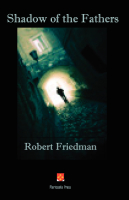 Shadow of the Fathers. By Robert Friedman. ISBN: 978-0-915745-75-3. 2007. $22.95 In Shadow of the Fathers, Robert Friedman turns a disturbing, possibly tragic historical event in Puerto Rico into a captivating work of fiction. Personal obsessions and public events collide as the novel's characters grapple with lies, false identities, puzzling connections, U.S. wars and colonialism. A rich, suspenseful tale, the novel moves from the colorful life of San Juan to the snow-covered streets of New York, from the pastel heat of Miami to the fog-shrouded canals of Amsterdam. Pablo Camino is the son of a doctor sent to Puerto Rico over four decades earlier to research a cure for pernicious anemia. While there, Dr. Cornelius Rhoads claimed in a letter to his close friend, "Ferdie" that he had purposely killed eight of his Puerto Rican patients and planned to exterminate several more of "that degenerate race." The letter was discovered and Rhoads was forced to leave the island. He later insisted it was all a joke. Pablo, a highly regarded Puerto Rican artist, is haunted by his dead father's past. Did the doctor really kill those patients? Has Pablo inherited from him the feelings of murder that often grip his own heart? When Pablo kills an intruder in his home, he vows to finally discover the truth about the father he never knew -and about himself. He flees Puerto Rico to look for Ferdie. Back on the island, Ralph Camacho, Pablo's best friend, carries out his own search into a past that casts heavy shadows on individual lives in the present.
Unamuno: A Lyrical Essay. By Pedro Blas González. ISBN: 978-0-915745-75-3 $22.95 The most extraordinary and exemplary piece of Latino prose writing, bordering in Rational lyricism. Scholarship and art in Europe, traditionally crisscrossed each other, particularly when the brightest minds where at it. Germany has Goethe, the Hispanic world has Unamuno. Both were consummated philosophers and creative writers, who left indelible marks, both in culture and philosophical argumentation. Goethe's "Werther" is credited with initiating Romanticism in Europe. "El Sentido Trágico de La Vida" ponders the ever-present human (and Hispanic) preoccupation for life, death and beyond, immortality. However, it takes a Latino scholar to analyze, scaffold, and present in an very understandable way to us the grandiosity of Unamuno's philosophical concerns and his scrupulous argumentation. Dr. Pedro Blas González is the first Latino scholar to elaborate and deconstruct Unamuno's philosophical work and related creative writings. This is a lyric work of prose, as well as of literary criticism, philosophical analysis, and pure rigorous Latino erudition advancing Hispanic thinking. Roberto Cabello-Argandoña, Editor.
Waves of Recovery: The Life of an Advocate of Latino Civil Rights. By Maurice Jourdane. ISBN: 978-0-915745-95-1 $26.95 This a riveting personal account of Maurice Jourdane--currently a Superior Court Judge and a member of Jerry Brown's California Attorney General's Office--leading to his legal representation and advocacy for farm workers and César Chávez's organizing efforts. Mo's life reads like a Greek mythic tale in which the hero suffers and endures moral and physical affliction in his quest, his now legendary legal fights and successes against the powerful California growers and agricultural interests in court. This biography is a testament to human strength in behalf of justice for Latinos. The success of César Chávez's civil rights movement and union organizing efforts cannot be fully understood without knowledge of the life and sacrifices of Maurice Jourdane, El Cortito. His legal successes, at great personal costs, solidified Chávez's leadership and prepared the way for the consolidation of the Farm Workers' Union, and ultimately for the farm workers to prevail against the powerful political and economic interests of the California growers. Roberto Cabello-Argandoña, Editor.
Latina Filmmakers and Writers: The Notion of Chicanisma Through Films and Novellas. Jenny Dean. ISBN: 978-0-9796457-1-6. $26.95 During the Chicano Movement in the 1960s and 1970s, Chicanas helped Chicanos achieve equal rights, while at the same time suffered oppression as women wihin their own race. In the 1970s, the Chicana Feminist Movement was founded to address the specific needs of Chicanas as women of color in the United States. Chicana artists began to write and produce works in which Chicanas were given a proper name, voice, and image. Soon, Chicanisma, a sense of sisterhood and feminist discourse, emerged to confront the triple oppression of race, class, and gender. Latina Filmmakers and Writers: The Notion of Chicanisma Through Films and Novellas examines the works of seven celebrated Latinas who collectively represent a 20-year history of Chicanisma: Chicana (a film by Sylvia Morales), Puppet: A Chicano Novella (a book by Margarita Cota-Cárdenas), La Ofrenda: The Days of the Dead (a film by Lourdes Portillo and Susana Muñoz), Paletitas de Guayaba (a book by Erlinda Gonzáles-Berry), El Espejo/The Mirror (a film by Frances Salomé España) and Loving Pedro Infante (a book by Denise Chávez). These works demystify masculine power and offer realistic portrayals of Chicanas and give them a rightful name, image, and voice in American culture. "Dean provides a thoughtful and honest account of ... the concept of Chicanisma. Latina Filmmakers and Writers cleverly situates Chicana literature and film at the perilous yet unique intersection of class, gender and race ...and weaves a Chicana feminist theory and original oral history research " Guisela Latorre, University of California. Santa Barbara. "This book deals with the voices and works of Latinas [whose voices]... must be heard since they elaborate on the concept of "Chicanisma."This is an important new book in the development of Chicana Studies and Latina thought. Kudos!" Dr. Luzma Umpierre, Human Rights Advocate. "...This book... is a must read text for contemporary society. ...[it] will be most helpful in Chicana and Chicano Studies, Women and Feminist Studies, Ethnic Studies, and Cultural Studies in understanding the experiences and issues concerning diversity in a postmodern situation." Dr. T. Osa Hidalgo de la Riva
Clásicos de la Literatura Hispanoamericana Colonial en su Contexto Sociohistórico. Dr. Clary Loisel. ISBN: 978-0-915745-97-5. $24.95 Esta monografía va dirigida a los lectores que ya tienen un conocimiento básico de la literatura hispanoamericana colonial pero que quieren un análisis más profundo de algunas obras principales del canon. Este libro sobre la literatura colonial constituye un esfuerzo por reunir el testimonio de nueve escritores de los siglos XVI y XVII que han expresado algunas experiencias y vicisitudes principales de varios pueblos de Hispanoamérica para acercarse a su identidad nacional y artística. Seleccioné a estas figuras por sus contribuciones únicas a las letras hispanas. El tema central de este libro es la transformación y la "nativización" de los modelos peninsulares por los escritores del Nuevo Mundo. Es mi esperanza que, volviendo a estudiar a estos autores y obras, podamos comenzar a comprender mejor una pequeña parte de la enorme producción literaria de los dos siglos después de la llegada de Cristóbal Colón en 1492. Divido el libro en dos partes principales: "El Siglo XVI: Literatura de la Conquista" y "El Siglo XVII: El Barroco, Arte Hispánico". Al principio de cada parte hay una introducción sobre el marco histórico-social así como de las corrientes estéticas de cada época. Cada uno de los nueve capítulos se dedica a las biografías y al análisis de la obra de los autores seleccionados: Hernán Cortés, Bernal Díaz del Castillo, Alonso de Ercilla y Zúñiga, El Inca Garcilazo de la Vega, Bernardo de Balbuena, Juan Ruiz de Alarcón, Juan del Valle Caviedes, Carlos de Sigüenza y Góngora y Sor Juana Inés de la Cruz. "El lector se siente atraído a la lectura de Clásicos de la Literatura Hispanoamericana Colonial por la claridad de su presentación y por la curiosidad de ciertos detalles que me han animado a releer a algunos escritores de la literatura colonial, por ejemplo a Sor Juana Inés de la Cruz". Ramón Corro, Profesor de Español Emeritus; University of Montana. "Este libro muestra de forma muy clara la transformación de los modelos literarios españoles realizados por diferentes autores en el Nuevo Mundo. Por lo tanto, puede servir como recurso útil para el profesor así como texto de trasfondo para el estudiante de letras renacentistas y barrocas". Robert S. Stone, Profesor Asociado; US Naval Academy. "Clásicos de la Literatura Hispanoamericana Colonial , por el profesor Clary Loisel, es un aporte importante a los estudios hispanoamericanos coloniales. Es de gran utilidad para un público general y para especialistas". Mark Cox, Profesor Asociado de Español; Presbyterian College. "Con Clásicos de la Literatura Hispanoamericana Colonial , Clary Loisel ha sabido abarcar las obras claves de la literatura colonial con la precisión y erudición necesarias para el especialista y con la claridad y llaneza para el gran público". Andre Moskowitz, City University of New York Graduate Center
Café Chronicles. Francisco J. Zermeño. ISBN: 978-0-915745-98-2 $17.95 Life is wonderful, and I have learned from it twice, my first 12 years in México, in Spanish, and the many others in California, in English. I know that every one has a unique life, but I could claim that mine has been a bit more unique. Why? I am a 6'4" café Mexican, that's why! In a land of chaparros, there I was in México. In a land of whites, here I was, and am. I was born in the high sierras, then was transplanted to urban Guadalajara. I survived. Then, I went back to the rural sierra, and this now city slicker couldn't rope a cow, especially in my black shoes. Heck, I tried playing soccer in México.too tall. I tried playing soccer in the USA, there was none in the 1960s. So, when I went into basquetball, my feet were faster than my hands on concrete. Shooting? A slingshot at a bird, ok, but a ball at a basquet? I went to the fields. Have you ever tried short hoeing lettuce or picking strawberries from my height? I had my grigo phase. Result? I couldn't even convince mother, who kept telling me, 'gringo culo prieto' - with Mexican motherly tender love, of course. I tried to fit in as a Freshman at UCSanta Bárbara. I was taking Bonehead English with Dr. Fernández. I couldn't. Heck, I've even made a run a city politics. Result? Missed it by 1,500 votes. The reason given me? Latinos don't vote. Yes, I wondered if the political machine is just not ready for a 6'4" Mexicaned café to join the elected elite. As a good Mexican, I have always adapted, fatallisticly, as is my, our, nature. Yes, I have always wondered if a caféless, tallless, USAless life would have been different. Yes. I think so. But this one's mine, and I'll keep it. So, what I have been doing is writing, and reading, kilos of words, from the outside looking in. It's been a two year plus weekly column, with what I've observed, with a café Latino consciousness. Some love it and learn from it. Others hate it and have told me to take my culo prieto back to México. Hey, is life wonderful or what? Hope you agree. Live on!
Soul Twins: A Latino Journey From The Edge To Self-redemption. By Oscar Vega Romero. ISBN 978-0-915745-93-7. $22.95 162 pages.
Latina Icons: Iconos Femeninos Latinos e hispanoamericanos. Edited by María Claudia André. La Mujer Latina Series ISBN: 978-0-915745-85-2. Floricanto Press, 2006. $26.95 This book brings the most prominent Latina icons, popular female figures, and offers the most important clear description of the process of iconization of famous cherished Latin American women. It attempts to define and provide meaning to these notable women within the context of popular symbols and the function these women played in the construction of their individual and collective Latina identity. These articles, written by well-known Latin Americanists, many of them Latinos themselves, reflect a most revealing landscape of iconization of these women ranging from religious, political, and popular sectors. These figures help us understand the complex discursive process of the creation of popular female images, and the influence that institutions and cultural traditions play in their creation. La Malinche, the movie actress María Félix, Sor Juana Inés de la Cruz, María Ilonza, Frida Khalo, Selena, Yemayá, Carmen Miranda, and Malena, the woman object of a most notable Tango, are among the figures discussed in this highly recommended book.Esta colección de ensayos explora los procesos de representación y de iconización de algunas de las figuras femeninas más prominentes de América Latina. En ella se intenta definir qué significado tienen estas figuras dentro del contexto popular y determinar cuál es la función que desempeñan en la construcción de una identidad colectiva e individual. Los ensayos aquí incluidos presentan un revelador panorama sobre las múltiples articulaciones entre lo religioso, lo político y lo popular que nos permite vislumbrar no sólo la compleja red discursiva que circula a través de los diversos medios de producción cultural, sino también establecer el nivel de participación e influencia que ejercen de los organismos institucionales en la construcción de símbolos, imágenes y tradiciones culturales. La Malinche, la actriz del cine María Félix, Sor Juana Inés de la Cruz, María Ilonza, Frida Khalo, Selena, Yamayá, Carmen Miranda, y Malena, la mujer centro del tango mas famoso escrito, son las figuras femeninas aquí discutidas extensivamente en este extraordinario libro.
Borrowing Time: A Latino Sexual Odyssey. By Carlos T. Mock, M.D. 978-0-915745-77-7 $24.95 300 pgs. "Whatever your orientation, no matter your ethnicity, you'll never be the same after a journey through this odyssey. A vivid and visceral portrayal of a sexual and political coming-of-age in today's America-and beyond." Laura S. Washington, Ida B. Wells-Barnett University Professor, DePaul University; Columnist, Chicago Sun-Times "Gay literature is rich in so many areas, yet we still have a need for strong stories from the world of Latino culture-about family, about youth, about coming out, about creating adult relationships, about AIDS. Now, Carlos Mock give us a strong Puerto Rican story that deals with all these isues." -Patricia Nell Warren, author of The Front Runner and The Wild Man. In Borrowing Time: a Latino Sexual Odyssey we get a glimpse of the different manifestations of AIDS: the fear, the shame, the regrets and the final victory. The "AIDS" crisis has been an opportunity for the homosexual community for growth, for strengthening ties, for reclaiming rights from the government, and, above all, for reflection. The AIDS epidemic can be seen by many as a curse, and for others, as the opportunity to bring out the best in you. My work as a sex therapist over 23 years with couples and individuals-many of whom are gays, lesbians, and bisexuals-has put me in touch with an issue that inevitably comes up: feelings of self-hatred and shame that many homosexuals internalize. The lack of tolerance for sexual diversity and the myopic vision of many fundamentalist religious groups have contributed to the prejudices. Books like Borrowing Time: a Latino Sexual Odyssey can be antidotes for this lack of understanding and acceptance. It can also be a useful tool for any homosexual or lesbian to understand and accept him or herself, without judgments. It takes the reader, gay or straight, into the mind, heart and dreams of Juan Subirá Rexach with great candor, honesty and humor. Dra. Gloria Mock
Remnants of Crypto-Jews Among Hispanic Americans. By Gloria Golden, Edited by Andrea Alessandra Cabello, University of California, Berkeley, and Sohaib Raihan. Floricanto Press. ISBN: 0-915745-56-9 Hidden deep in the heart of the American Southwest among the larger Hispanic population are descendants of the Sephardim, Jews from Spain and Portugal. Five hundred years after their expulsion from Spain remnants of Judaism are still practiced within Southwestern Hispanic communities. Often unaware of their origins, conversos have revealed, through oral history, how the ancestral faith of the Crypto-Jews has been passed on from generation to generation.
THE DRUGLORD. It is the true life story of Gonzalo Rodriguez Gacha, the drug lord of the Bogota branch of the Colombian Drug Cartel, this historical novel offers a factual and knowledgeable Colombian perspective that well connected Colombians have known for years: the real Drug Cartel, a group consisting of over two-hundred drug traffickers, met for the first time in 1976, not to discuss drugs, but to devise a solution to the kidnapping and murders inflicted upon them by the Marxist guerrillas. This led to cooperation on other matters --like cocaine. The Drug Lord, born an outcast in 1952, during Colombia's bloody civil war, rose from poverty to multi-billionaire status in the violent world of cocaine traffic. It is the gripping story of the Drug Lord's history when at age six, he witnesses the massacre of his family by the Colombian Army. It shows his involvement with the adolescent city gang, El Centro, which controlled Colombia's lucrative emerald black market, to the Cartel's development from a national to international status. The Colombian Drug Lord, very much like Mexican drug lords, is also the story of a country (Colombia) torn apart by violence, the war against drug --the oligarchy against the poor, government against popular uprisings, drug massacres, social and class conflicts, kidnappings-- of business, love and myopic U.S. policy in Latin America devoted to stamp communism at any price. Mr. Neissa posits that the Colombian Drug Cartel is, like the Mafia, deeply entrenched in their native cultures, and eventually will survive war on drugs. Themes in this biography are cocaina, cocaine, Colombian drug cartel, drug trafficking, drug war, Medellín, narcotráfico, war on drugs, "columbian drug cartel." Most highly recommended. |
|
You may also place your orders through www.amazon.com using the navigation bars.
|